Buy a lawn mower first if you have enough grass to mow regularly. Buy a string trimmer second if your lawn has fence lines, trees, foundations, beds, or other places the mower cannot reach. After that, choose cleanup tools based on the debris your yard actually produces—not on a generic list of equipment.
For most new lawn owners, the practical order is: mower, trimmer, basic cleanup tools, then a dedicated edger, blower, spreader, or pruning equipment only when a repeating task justifies it. This keeps the first purchases focused on the work that makes the biggest visible difference: keeping grass at a manageable height and preventing edges from looking overgrown.
The short purchase order
- Lawn mower: Buy first when turf needs routine cutting.
- String trimmer: Buy next when mower-inaccessible grass is visible after each cut.
- Rake, gloves, and basic hand pruners: Buy early for debris, light pruning, and routine cleanup.
- Hose and watering setup: Buy when rainfall is not sufficient or new plantings need regular watering.
- Edger or blower: Add when you have a repeated need for crisp hardscape edges or faster debris cleanup.
- Loppers, hedge trimmer, shovel, wheelbarrow, and spreader: Add only when shrubs, planting work, hauling, or lawn treatments become recurring jobs.
- Large or higher-risk cutting equipment: Rent, borrow, or hire out for occasional heavy work rather than buying it by default.
1. Buy a mower first—if you have a lawn to maintain
A mower is the first priority because grass growth is usually the most frequent and most obvious maintenance task. A mowed lawn can still look reasonably cared for even before its edges are perfectly detailed. By contrast, buying a blower, edger, or hedge trimmer before you can keep the grass cut solves a secondary problem first.
Choose the mower type around the area, terrain, storage space, and grass conditions on your property. Small, relatively flat lawns may suit a simple push or reel mower, while larger lawns or faster-growing grass may call for a powered mower. The important decision is not owning the largest machine; it is owning a mower you can safely maneuver, store, maintain, and use often enough.
Before buying, walk the lawn and note:
- The approximate area of mowable grass.
- Narrow gates, side yards, slopes, and tight turns.
- Tree roots, drainage grates, rocks, toys, hoses, and other obstacles.
- Whether you need to collect clippings or can leave them on the lawn.
- Whether the mower can move from storage to the lawn without stairs or awkward lifting.
A mower needs regular basic care, especially a clean deck and a sharp cutting blade. Dull blades can leave ragged grass tips, so follow the mower manual for inspection, cleaning, blade service, and storage procedures. For a broader upkeep routine, see power tool maintenance schedule.
Mower safety comes before convenience
Read the operator’s manual for the specific mower before first use. At minimum, clear the lawn of loose objects, wear protective eyewear, mow in daylight, and avoid mowing wet grass. Briggs & Stratton also advises checking the yard for debris and wearing protective eyewear before mowing. Their mower safety guidance is a useful baseline, but your mower’s manual controls when instructions differ.
Wear sturdy closed-toe footwear. Keep children, pets, and bystanders away from the mowing area. Do not bypass guards, defeat safety controls, or reach under a mower deck. For slopes, verify the manufacturer’s instructions for your model rather than assuming it can be used safely across or up and down every incline.
2. Buy a string trimmer when the mower leaves obvious unfinished areas
A string trimmer is usually the second powered tool because mowers cannot cut closely around posts, fences, trees, walls, bed edges, and foundations. It also helps manage grass on some areas a wheeled mower cannot easily reach.
A trimmer can sometimes make a basic edge along a sidewalk or driveway, so it can delay the need for a dedicated edger. A dedicated edger is a refinement tool: it produces a more defined boundary, but it is rarely the first solution to an unmowed or overgrown lawn. LawnLove similarly distinguishes between a trimmer’s ability to edge in a pinch and the cleaner result from a dedicated edger. See its overview of mower, trimmer, and edger roles.
Buy a trimmer early when any of these are true:
- Grass around obstacles looks shaggy after mowing.
- You have fence lines or retaining walls where mower wheels cannot get close.
- Beds, trees, or utility features create many small areas to finish.
- A slope or narrow strip makes mowing awkward.
Wait if the lawn is very small, open, and mostly rectangular, with little trimming required. A pair of hand shears can handle occasional touch-ups while you learn what work recurs.
Use a trimmer carefully around trees and hard surfaces
String trimmers can throw debris. Wear eye protection, use the guard and accessories specified by the manufacturer, and keep people and pets clear. Check the trimmer manual for the correct line type, line diameter, battery system or fuel requirements, and operating limits.
Do not let the line contact tree trunks, especially young trees. Illinois Extension notes that repeated string-trimmer damage can injure a trunk severely enough to girdle and kill a tree. It also recommends impact-resistant eye protection and notes that a face shield does not replace safety glasses. Read its lawn-equipment safety and maintenance guidance.
3. Add simple cleanup tools before buying a blower
After mowing and trimming, you will need a way to move clippings, leaves, twigs, and loose debris. For many new homeowners, a leaf rake, a small garden rake, gloves, and a tarp or yard-waste container handle this work well at a lower cost and with less storage burden than a blower.
A blower becomes worthwhile when cleanup is frequent, the property has many trees, or you regularly clear broad paved areas. It is a time-saving tool, not an automatic first purchase. A rake is often enough for a small lawn, occasional leaves, and post-mowing cleanup.
Choose a blower later if you repeatedly find that raking is the task preventing you from maintaining the yard. If you use one, follow the manual for hearing protection, eye protection, battery or fuel handling, and safe operating distance from people, pets, vehicles, and loose gravel.
4. Buy watering tools based on climate and plant needs
A hose with an adjustable nozzle is a practical early purchase if you have new trees, shrubs, containers, or garden beds that need hand watering. It may matter more than an edger if you moved into a home with recent landscaping.
Do not buy a complex irrigation system just because it appears on a starter-tool checklist. First determine whether your lawn and plantings need supplemental water, how local watering restrictions apply, and whether existing irrigation components already work. Verify local requirements and follow current official water-use guidance for your area.
5. Defer a dedicated edger until edges are your recurring problem
A dedicated edger is useful when sidewalks, driveways, and bed borders make up a visible part of the yard and you want a consistently crisp line. It is not essential when a trimmer can maintain acceptable edges or when you have only a small amount of hardscape.
Buy one when you are regularly spending too much time trying to edge with a trimmer, or when uneven edges remain the main thing making an otherwise mowed lawn look unfinished. Until then, use the trimmer cautiously, or use a manual edging tool for occasional touch-ups.
6. Add pruning tools only for plants you actually have
Shrubs and trees create a different category of work from lawn care. Do not buy hedge trimmers, pole tools, or heavy cutting equipment simply because they are common homeowner tools.
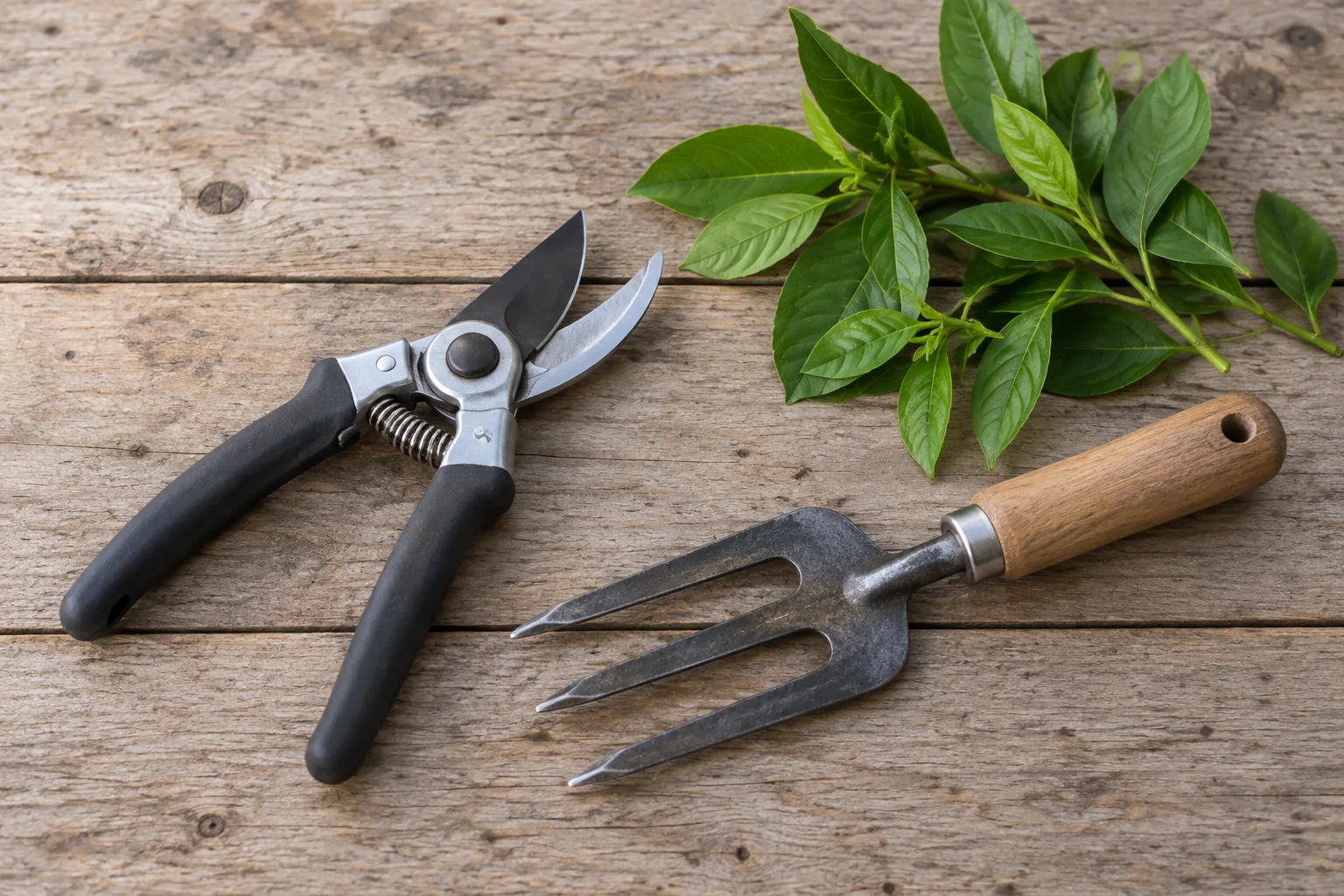
Start with hand pruners for small stems, deadheading, and light cleanup. Add loppers when you have branches that are too large for hand pruners but still within the lopper’s stated capacity. Keep blades clean and sharp, and use the tool only within its intended cutting range. For care guidance, see how to maintain pruners and loppers.
A hedge trimmer makes sense only if you have hedges or shrubs that need repeated shaping. It is inefficient for occasional selective pruning, where hand pruners are more precise.
For tall branches, storm damage, branches near utility lines, or cutting that requires leaving the ground, hire a qualified professional. Do not use a ladder with a powered cutting tool unless the tool manufacturer and applicable professional safety guidance specifically allow the task; verify current official guidance rather than improvising a method.
7. Rent, borrow, or hire out occasional heavy-duty work
Some tools are valuable but do not deserve immediate ownership. Examples include core aerators, stump grinders, large tillers, chipper-shredders, and equipment for major grading or removal projects. These tasks are often seasonal or one-time, and the machine may require significant storage, transport, maintenance, and safety knowledge.
Renting can make sense when a job is infrequent but clearly defined. Borrowing can work for a familiar tool when you receive the manual, all guards and accessories, and a proper orientation. Hiring a professional is often the better choice when the work involves large trees, overhead hazards, unstable ground, buried utilities, or equipment you have not used before.
A practical first-season starter kit
For a typical new homeowner with a modest lawn, start with:
- A mower suited to the yard.
- A string trimmer if there are obstacles and edges to finish.
- Safety glasses, sturdy footwear, gloves, and hearing protection where the tool manual calls for it.
- A leaf rake and basic garden rake.
- Hand pruners.
- A hose and nozzle if plants need supplemental water.
Then use the yard for a full growing season before adding specialized equipment. Keep a short list of chores that repeatedly take too long, cannot be done well with current tools, or require paying for help more than once. That list—not the size of a retailer’s tool aisle—should determine the next purchase.
The bottom line
The best yard tools to buy first are the ones that address weekly visible maintenance. For most lawns, that means a mower first and a string trimmer second. Add simple hand tools for cleanup, then let your trees, shrubs, hardscape, climate, and actual workload determine whether you need a blower, edger, spreader, hedge trimmer, or larger specialty equipment.
Buying in this order keeps the yard manageable without filling the garage with tools that solve problems you may not actually have.
References
- 7 Lawn Care Tools Every New Homeowner Needs. (n.d.). https://www.lawnstarter.com/blog/lawn-care-2/essential-lawn-care-tools-for-homeowners
- Essential Lawn Care Tools for Every Homeowner. (n.d.). https://lawnlove.com/blog/top-lawn-care-tools-to-have-in-your-arsenal
- 10 Essential Outdoor Tools for New Homeowners. (n.d.). https://everydayoldhouse.com/outdoor-tools-new-homeowners
- 8 Essential Outdoor Tools and Equipment Every Homeowner Should Own | TruGreen. (n.d.). https://www.trugreen.com/lawn-care-101/blog/lawn-care-tips/8-essential-outdoor-tools-and-equipment-every-homeowner-should
- What yard tools should every lawn enthusiast invest in?. (n.d.). https://www.reddit.com/r/lawncare/comments/ho38wp/what_yard_tools_should_every_lawn_enthusiast
- Essential Lawn Care Tools Every Homeowner Should Own | TLC. (n.d.). https://tlcthelawncompany.com/blog/essential-lawn-care-tools-every-homeowner-should-own-tlc
- These five pieces of equipment will help you maintain your …. (n.d.). https://www.facebook.com/PartSelect/posts/these-five-pieces-of-equipment-will-help-you-maintain-your-lawn-and-keep-it-look/756462833150206
- 14 useful outdoor tools homeowners should have | Plymouth Rock. (n.d.). https://www.plymouthrock.com/resources/14-useful-outdoor-tools-homeowners-should-have
- Maintaining Lawn Equipment | Lawns | Illinois Extension | Illinois. (n.d.). https://extension.illinois.edu/lawns/maintaining-lawn-equipment
- Lawn Mower Safety Tips & Operating Guide. (n.d.). https://www.briggsandstratton.com/en-us/gas-lawn-mowers/safety
 How Often Should You Clean and Maintain a Lawn Mower?
 How to Choose a Lightweight String Trimmer When Bending Is Difficult