A board binds because the saw blade is being squeezed, rubbed sideways, or forced off its intended cut line. The most common causes are a kerf that closes as the wood moves, poor support that lets a panel sag, a warped or dirty blade, and a cut that is not guided straight. Do not push harder when this happens: release the trigger, keep control of the saw, and wait for the blade to stop before assessing the setup.
Binding can lead to a stalled saw or kickback, especially with a circular saw or table saw. A sharp, clean blade, stable support, and a cut path that stays open are the basics. If a saw repeatedly binds in otherwise straight, stable material, stop using it until the blade and saw alignment have been checked.
What blade binding looks and feels like
Binding usually starts with one or more warning signs:
- The saw slows noticeably or sounds strained.
- The cut becomes harder to advance even though you are not cutting a knot.
- The blade leaves burn marks or the wood smells scorched.
- The kerf visibly narrows behind the blade.
- A circular saw pulls sideways, climbs, or stops moving forward smoothly.
- A table-saw workpiece resists feeding or begins to turn toward the back of the blade.
Do not try to correct a binding cut by twisting the saw, levering the board apart with the running blade, or forcing the work through. Release the switch immediately if the blade binds or the saw stalls; do not remove a circular saw from the cut while its blade is still rotating. Safety Resources
The four main reasons wood binds during a cut
1. The wood is closing on the kerf
Wood is not always dimensionally stable. A board can contain internal stress from how it grew, dried, or was milled. Once the saw relieves that stress, either side of the cut may shift. If the two sides move toward each other, they pinch the blade.
This is most common when ripping solid lumber, particularly boards that are cupped, twisted, bowed, knotty, or visibly stressed. A board may appear flat before cutting, then curve or close tightly once the kerf reaches partway through it.
A closing kerf is a wood problem, not a signal to apply more feed pressure. Stop the saw, let the blade stop, and secure the work before deciding how to proceed. For a circular-saw cut, a properly placed wedge in the already-cut portion of the kerf can help hold it open, but only after the saw is off and the blade has stopped. Do not place hands near the blade path.
If a solid board moves dramatically as it is cut, it may not be suitable for a straight, stable project part without further milling or a change in material selection.
2. The work is supported in the wrong places
A sheet or long board can sag under its own weight, especially as the cut nears the end. When the unsupported section drops, the two sides of the kerf can pinch together. The saw’s weight and downward pressure can worsen the problem.
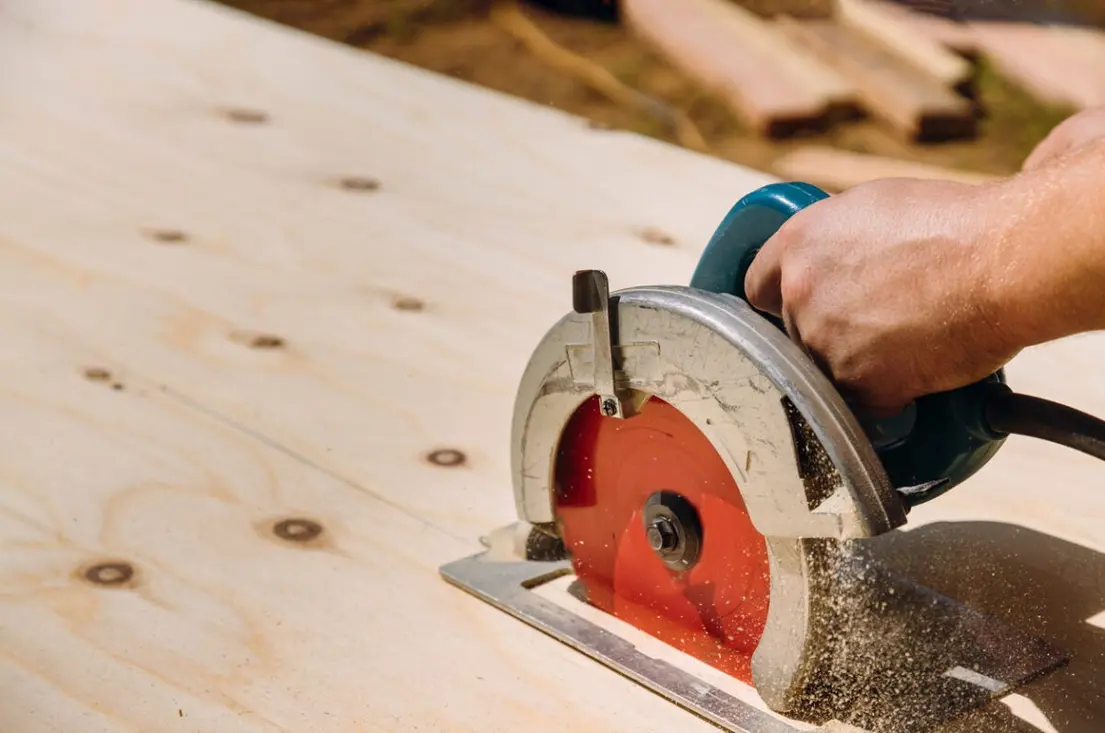
For circular-saw work, support the panel or board close to the cut while ensuring the offcut has room to drop or remain supported without trapping the blade. Rigid foam under a sheet is one common approach because it supports the panel across a broad area while allowing the blade to cut slightly below the workpiece. If using sawhorses or cross supports, position them so neither piece sags into the blade path.
The correct support layout depends on which section will be retained and how the material will move after separation. Before starting, look at the planned cut and ask: will either side sag, twist, or drop into the blade? If the answer is yes, reposition the supports and clamps.
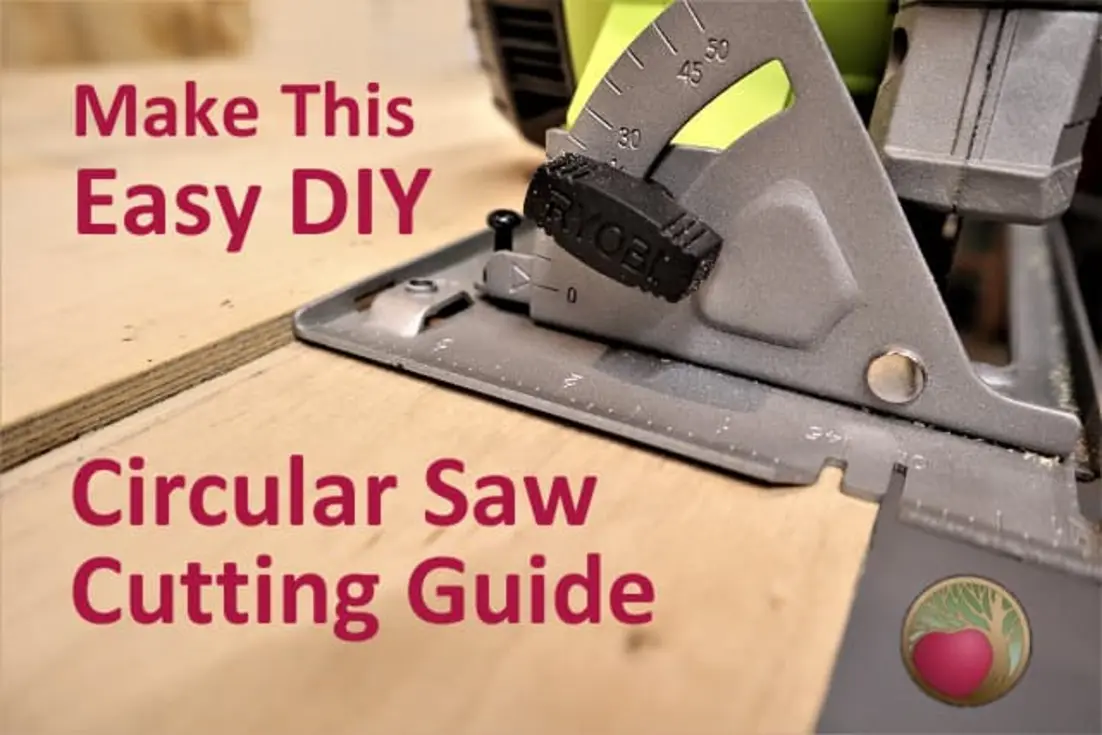
Large panels should be supported so they do not pinch the blade, and a straightedge guide can help prevent an unguided circular saw from wandering. Safety Resources
3. The blade has too much friction or is damaged
A dull blade does not cut efficiently. It rubs more, heats up, and requires more force. Pitch or sap buildup also increases friction along the blade sides. A bent, warped, overheated, or damaged blade can rub one side of the kerf and steer the saw off line.
Inspect the blade with the saw unplugged or its battery removed, following the tool manual’s procedure. Replace a blade that is bent, cracked, missing teeth, visibly damaged, or not approved for the saw. Clean pitch and resin only with a blade-cleaning method compatible with the blade manufacturer’s instructions.
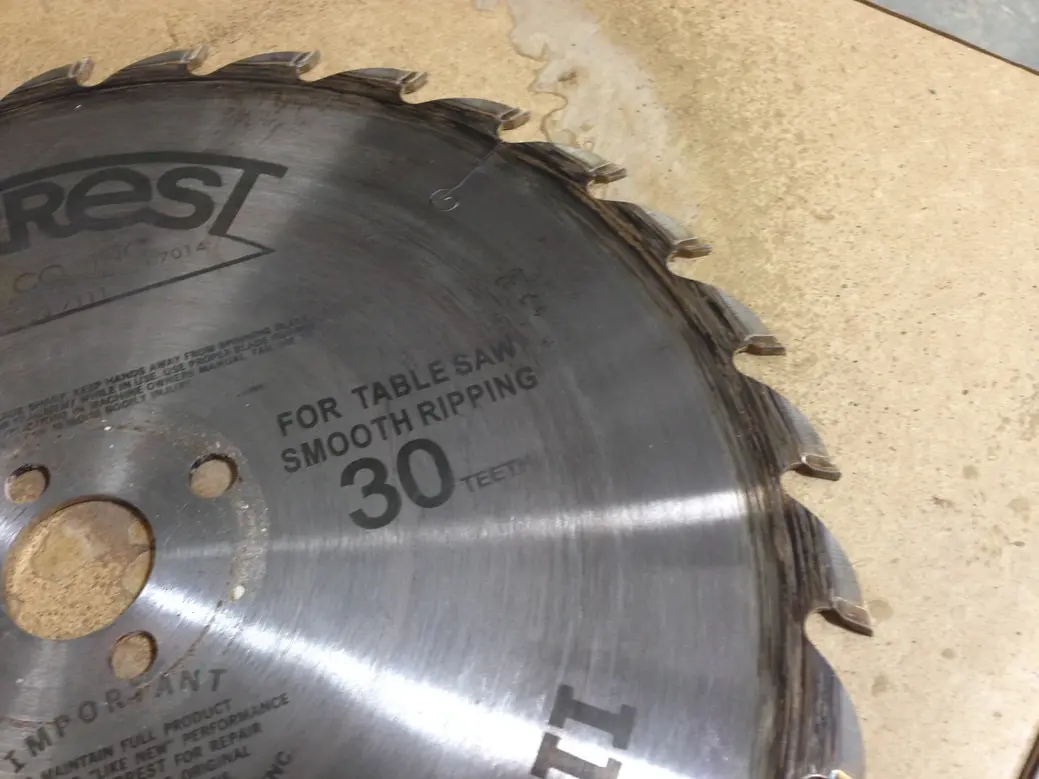
Use a blade intended for the material and cut type. A general-purpose wood blade may work for many jobs, but dense lumber, plywood, laminate-faced sheet goods, and rough framing stock can call for different tooth patterns and blade designs. Confirm the blade diameter, arbor fit, speed rating, and permitted blade types in the current saw manual before installation.
A sharp, clean blade with adequate tooth clearance reduces friction and the chance of binding. Safety Resources For routine inspection and cleaning basics, see circular saw blade maintenance.
4. The saw, fence, or guide is forcing the cut sideways
A saw blade needs to travel in line with the kerf. If a circular saw drifts away from the guide, if a guide is crooked, or if a table-saw fence is not properly aligned, the work can be pushed sideways into the blade. That side pressure creates heat, burning, rough cut edges, and binding.
With a circular saw, use a straight, firmly clamped guide for long rip cuts and keep both hands on the saw as directed by the manufacturer. Let the saw advance at a steady rate rather than steering it back toward the line mid-cut. If it starts to wander, stop and reset rather than twisting the saw in the kerf.
For a table saw, verify fence and blade alignment according to the saw manufacturer’s manual. Use the saw’s riving knife or splitter when the manual specifies it. These parts are designed to help keep the kerf from closing behind the blade; do not remove or defeat safety equipment unless the manufacturer specifically permits a particular operation and provides an alternate safe setup.
A quick diagnosis: what happened just before the bind?
The kerf closes behind the blade
The likely cause is internal wood tension or a support layout that allows the work to sag. Stop, secure the material, and change the support arrangement. If solid wood continues to move significantly, do not force the cut.
The saw bogs down but the kerf stays open
Start with the blade. Check for dull teeth, resin buildup, incorrect blade selection, a damaged blade, or excessive cutting depth. Set circular-saw depth according to the manufacturer’s instructions; an unnecessarily deep blade can add drag and increase exposure below the work.
The saw pulls to one side or leaves a wandering cut
Check the guide, your feed direction, and the blade condition. A crooked guide or a warped blade can cause a saw to steer. On a table saw, inspect alignment using the procedure in the official manual rather than making adjustments by guesswork.
Binding happens only near the end of a panel cut
This strongly suggests poor support. The offcut or main piece is likely dropping, twisting, or settling onto the blade. Reset the panel on continuous support or rearrange supports so the kerf cannot close.
Binding happens around knots, cracks, or rough grain
Knots, embedded debris, splits, and irregular grain can change cutting resistance or cause the material to move unpredictably. Stop if the cut becomes unstable. Inspect both faces and edges for fasteners, staples, nails, or other hidden obstructions before continuing.
How to prevent circular saw binding
- Plan the support before starting. Keep the panel or board stable and prevent either side of the cut from sagging into the blade.
- Clamp the work and guide securely. Do not rely on a hand or knee to hold a shifting panel in place.
- Use a straight guide for long cuts. A guide reduces wandering, which reduces side pressure on the blade.
- Use a clean, sharp, undamaged blade. Replace damaged or unsuitable blades rather than trying to compensate with force.
- Keep the saw moving straight. Stand in a balanced position, hold the saw as instructed in its manual, and avoid twisting it during the cut.
- Let the blade do the cutting. Use steady, moderate feed pressure. If the saw slows or the cut tightens, stop.
- Check the material first. Avoid cutting stock that is badly warped, severely cracked, or likely to move unpredictably without changing the cutting plan.
Keep both hands on a circular saw, do not force it through a cut, and release the switch if it begins to bind. Safety Resources
Preventing kickback after a bind starts
Kickback occurs when the blade grabs the work or the saw is driven backward or upward unexpectedly. The exact motion differs by saw type, but the response is the same: do not fight a stalled or pinched cut by forcing the tool forward.
For a handheld circular saw:
- Maintain a firm two-handed grip before starting the cut.
- Keep your body positioned so you are not directly behind the saw’s likely backward path.
- Release the trigger as soon as the saw binds, stalls, or begins to climb.
- Keep the saw in place until the blade stops completely.
- Do not restart with the blade buried in a tight kerf unless the material has been secured, the kerf is open, and the restart method is permitted by the tool manual.
For a table saw, keep the work against the fence only when performing an appropriate rip cut, use the manufacturer-provided riving knife or splitter when applicable, and do not continue feeding a board that is twisting or closing behind the blade. Consult the current manual for the correct push-device use, guard setup, and procedures for the specific operation.
When to stop and correct the setup
Stop cutting and troubleshoot before continuing if you notice repeated binding, smoke, burning, a blade that will not track straight, unusual vibration, or a board that shifts after the kerf opens. Continuing can damage the blade, damage the saw, ruin the workpiece, or create a kickback hazard.
Do not continue with a blade that appears warped, bent, broken, or overheated. Do not use a saw with a damaged guard, loose arbor hardware, or alignment issue. Have the tool serviced or follow the manufacturer’s inspection instructions before using it again.
The practical rule is simple: an open kerf, stable support, a straight cutting path, and a sharp blade make a cut predictable. If any of those conditions changes while the saw is running, stop instead of forcing the cut.
References
- Handling Circular Saw Kickback. (n.d.). https://www.fouroakscrafts.com/handling-circular-saw-kickback
- Table saw keeps binding : r/woodworking - Reddit. (n.d.). https://www.reddit.com/r/woodworking/comments/1ex7tmq/table_saw_keeps_binding
- How to prevent kickback and pinching when cutting wood with a …. (n.d.). https://www.facebook.com/groups/1493326978176093/posts/1722306158611506
- What are some of the reasons why a circular saw can start to bind …. (n.d.). https://www.quora.com/What-are-some-of-the-reasons-why-a-circular-saw-can-start-to-bind-and-stall-while-cutting-a-relatively-thin-sheet-of-wood
- Preventing Your Panel Saw from Binding During Rip Cuts. (n.d.). https://www.sawtrax.com/preventing-your-panel-saw-from-binding-during-rip-cuts
- For people who cut wood, how do you deal with kickback? - Reddit. (n.d.). https://www.reddit.com/r/DIY/comments/a1ymyt/for_people_who_cut_wood_how_do_you_deal_with
- Circular saw kickback: causes and prevention methods? - Facebook. (n.d.). https://www.facebook.com/groups/woodworkingforbeginner/posts/2949423505212255
- Table-Saw Kickback: Why It Happens and How to Prevent It - FineWoodworking. (n.d.). https://www.finewoodworking.com/2024/12/16/table-saw-kickback-why-it-happens-and-how-to-prevent-it
- HOW TO PROPERLY USE A CIRCULAR SAW AND PREVENT KICK BACK | Safety Resources | Indianapolis. (n.d.). https://www.safetyresources.com/how-to-properly-use-a-circular-saw-and-prevent-kick-back
- Circular Saw Safety: Prevent Kickback and Blade Binding - BIYOTI. (n.d.). https://biyoti.com/circular-saw-safety-prevent-kickback-and-blade-binding
 Why a Circular Saw Blade Deflects During a Cut and How to Troubleshoot It
 How to Reduce Tear-Out With a Circular Saw
 Circular Saw Blade Maintenance: Clean, Sharpen, or Replace?