A track saw can replace much of a table saw’s work if your projects center on breaking down plywood, MDF, doors, panels, and other large sheet goods—especially in a small shop or on location. It is not a complete replacement if you regularly rip solid wood to the same width, cut narrow strips, process lots of smaller parts, or need table-saw-specific operations.
The practical question is not which saw is better. It is where the material is easier to control. A track saw keeps a large panel still while you move the saw. A table saw keeps the saw still while you move the workpiece. That difference drives the decision for anyone considering a shift away from a table saw after wrestling full sheets through a limited workspace.
The Short Answer
Choose a track saw if most of your cutting involves full or partial sheets, long panel cuts, onsite work, or a shop that cannot spare permanent floor space for infeed and outfeed support.
Choose a table saw if you repeatedly rip boards and smaller panels, need consistent narrow strips, make many identical-width parts, or work heavily with solid lumber.
For many woodworkers, the most useful arrangement is not one saw replacing the other. Use a track saw to break large panels into manageable pieces, then use a table saw for final-width rips and repeated smaller cuts.
Track Saw vs. Table Saw at a Glance
| Decision factor | Track saw | Table saw |
|---|---|---|
| Full plywood sheets | Usually easier to manage | Often requires substantial infeed and outfeed space |
| Repeated identical rips | Slower to set up for each cut | Usually faster with a properly set fence |
| Narrow strips | Generally awkward or impractical | Usually the better choice with appropriate workholding and push devices |
| Portability | Strong advantage | Portable jobsite models exist, but setup is still larger |
| Small-shop storage | Stores compactly with rails | Needs a stable working footprint |
| Long straight panel cuts | Excellent | Possible, but sheet handling can be difficult |
| Solid-lumber processing | Capable within its cut capacity, but less efficient for production ripping | Usually better suited to repeated ripping |
| Crosscuts in large panels | Excellent | Limited by table support and workpiece control |
| Plunge cuts | A core capability on many track-saw systems | Not a typical table-saw task |
| Dadoes and similar operations | Depends on the saw and accessory system | Depends on the saw, blade setup, and manufacturer instructions |
When to Use a Track Saw
A track saw makes the most sense when the workpiece is large enough that moving it is the problem. The guide rail supports a straight cut line across the panel, so you can cut a sheet while it rests on a stable work surface.
Breaking Down Plywood and Other Sheet Goods
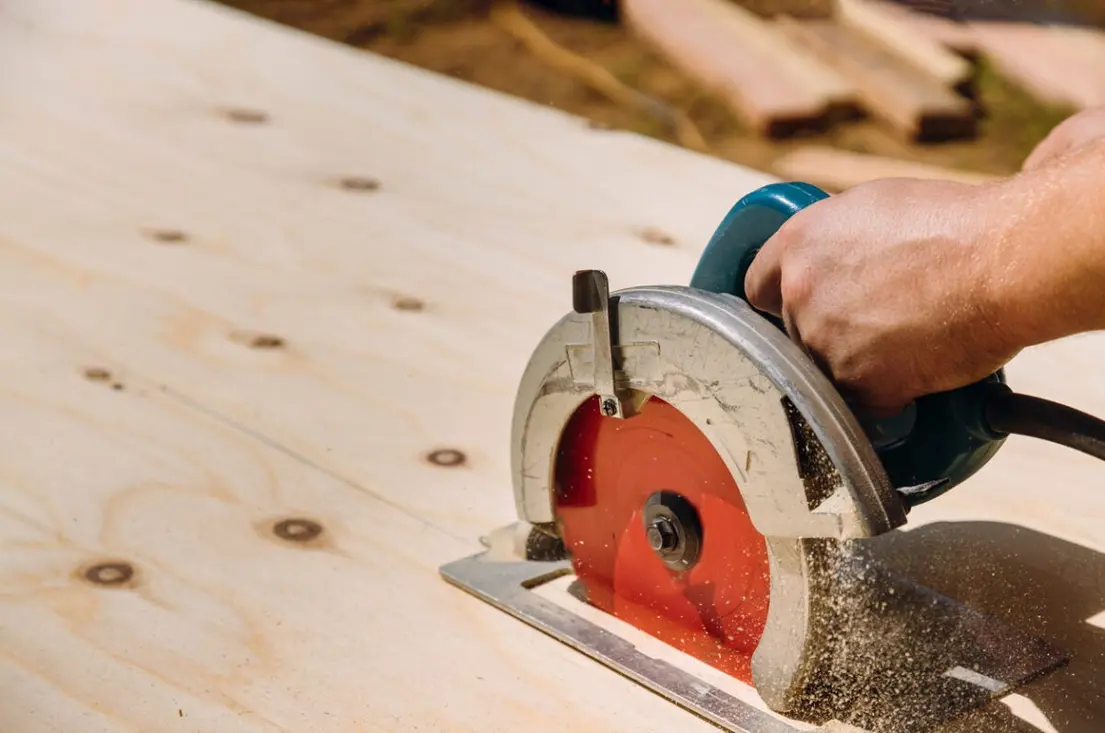
A track saw for plywood is especially useful when starting with full sheets. Rather than lifting a large panel onto a table, you place the panel on supported sacrificial material or another approved cutting surface, position the rail on the layout line, and cut.
This approach can reduce the handling burden associated with large panels. Kreg notes that guided track systems are well suited to oversized materials because the material stays in place instead of being wrestled through a stationary saw. A track saw can also make rip, crosscut, bevel, and plunge cuts when the model and setup support them. Kreg’s track saw vs. table saw overview describes these common applications.
A track saw is a strong fit for:
- Cabinet sides, shelves, and casework parts cut from sheet goods
- Worktops, desktop panels, and wide trim material
- Door trimming and onsite fitting
- Long crosscuts or rips in plywood, MDF, melamine, and similar panels
- Jobs done in a driveway, garage, unfinished room, or jobsite
- Shops where a table saw would block the main work area
Portable Work
For portable woodworking saw needs, a track saw is usually simpler to transport than a table saw plus stand, extensions, and material supports. The saw, rails, and support setup can travel to the work rather than requiring material to come back to the shop.
Portability does not eliminate setup time. You still need a flat, supported workpiece; a clear cutting path; adequate rail length; and a way to prevent the offcut from dropping, shifting, or closing the kerf.
Cuts That Start Away From an Edge
A plunge-capable track saw can begin a cut within a panel rather than only from an edge. That is useful for openings and cutouts, but it requires careful layout and adherence to the saw’s manual. Confirm the required rail position, depth setting, workpiece support, and any manufacturer limits before making plunge cuts.
When a Table Saw Is the Better Tool
A table saw excels when many cuts share the same relationship to the fence. Once the fence is set, you can process repeated parts without measuring and placing a guide rail for every cut.
Repeated Ripping of Boards and Parts
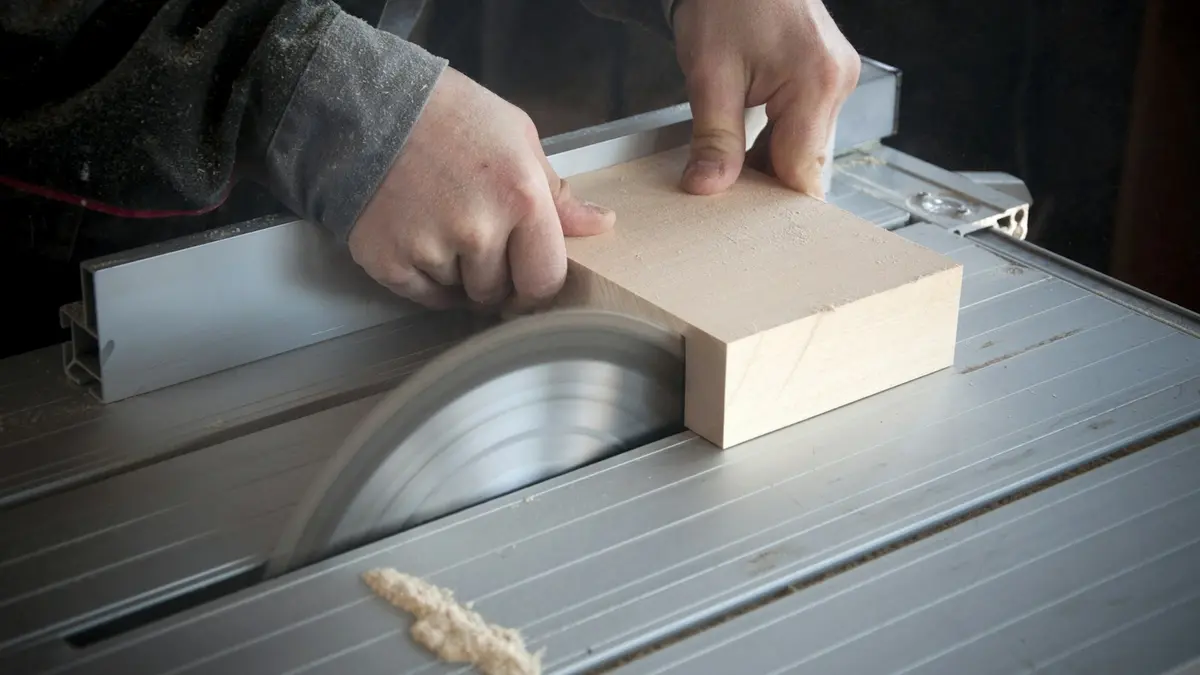
If you turn rough boards into rails, stiles, face frames, trim, or strips of consistent width, a table saw is generally more efficient. The rip fence positions the workpiece for lengthwise cuts, and the fence scale helps establish the blade-to-fence distance. This table-saw instruction manual identifies the rip fence as the component used to position stock for ripping.
This is where a track saw may reduce table-saw use without fully replacing it. You can use the track saw for initial panel breakdown, but repeated final sizing is typically faster at the table saw.
Narrow Material
A track saw needs enough room beside the rail and enough stable workpiece area to support the saw and guide system. As a board gets narrower, setup becomes less convenient and less secure.
A table saw is usually more practical for narrow rips—but only with a safe, deliberate method. Do not freehand workpieces. Use the fence, an appropriate push device, and any auxiliary support or jig specified for the operation. Check the saw’s current manual for approved procedures and minimum workpiece guidance.
High-Volume Shop Work
For a batch of identical parts, the table saw’s fixed fence is its main advantage. It can be more efficient for repeated rips, repeated crosscuts with appropriate accessories, and routine solid-wood dimensioning.
Table saws are also commonly used for rip cuts, crosscuts, miter cuts, bevel cuts, and—where the particular saw and blade setup permit—dado cuts. Dash-Board PWS’s comparison highlights this broader stationary-saw role. Do not assume every table saw accepts every accessory or cutting configuration; verify compatibility and procedures in the manufacturer documentation for your specific saw.
Can a Track Saw Replace a Table Saw?
It can, for the right kind of work.
A track saw can be a credible primary saw if you mainly build cabinets from sheet goods, make occasional furniture from pre-dimensioned material, work in a small space, or need to cut where the project is installed. Add a reliable work surface, enough guide rail for your longest common cuts, a way to support panels, and accurate layout tools, and you can handle a large share of panel-processing tasks.
It is less likely to replace a table saw if your routine includes:
- Milling and repeatedly ripping hardwood boards
- Producing many narrow strips
- Cutting a large number of identical parts every week
- Making operations that depend on dedicated table-saw accessories
- Processing short pieces that are more safely and efficiently controlled against a fence and miter gauge
The best answer may be a workflow change rather than a complete replacement. A track saw can eliminate the most awkward part of table-saw work—breaking down full sheets—while leaving the table saw for work it handles more efficiently.
The Accessories That Change the Decision
The base price of either saw does not tell the whole story. Consider the supporting system needed to make accurate cuts repeatedly.
Track Saw Setup Needs
A useful track-saw setup commonly requires:
- Guide rails long enough for your typical cut length
- A stable, flat panel-support system
- Sacrificial material or another approved method to support through-cuts
- A dependable measuring and squaring method
- Rail connectors if a single rail is not long enough
- Clamps when the workpiece, rail condition, cut direction, or manufacturer instructions call for them
- Dust collection compatible with the saw, if your manual specifies or recommends it
Do not assume a rail will grip every surface equally. Keep rail contact surfaces clean, inspect grip strips and rails for wear or damage, and clamp the rail when the setup is not secure. Verify the approved clamping method in the saw and rail documentation.
Table Saw Setup Needs
A table saw works best when it has:
- A correctly aligned blade and fence
- Enough infeed, outfeed, and side support for the workpiece
- A suitable blade for the material and cut
- A working guard system and riving knife for through-cuts
- Push devices appropriate to the workpiece and operation
- A stable stand or base and clear floor space
The work area matters as much as the saw. A compact jobsite table saw may be portable, but it still needs controlled support for long boards and large panels. If you do not have that space, a track saw may be the more workable portable woodworking saw.
Accuracy: Straight Cuts vs. Repeatable Cuts
Both tools can produce accurate work, but they achieve accuracy differently.
A track saw is accurate when your rail is positioned accurately. Every cut begins with layout, rail placement, and confirmation that the material is supported. This is excellent for one-off panel dimensions, long cuts, and cuts made directly to a marked line.
A table saw is accurate when the fence is calibrated and the workpiece is controlled consistently. That makes it particularly effective for repeated-width parts. Set the fence once, then make a series of matching rips without repositioning a rail.
For cabinet work, a track saw can often handle initial panel sizing very well. For a run of face-frame parts or repeated drawer components, the table saw often regains the advantage.
Safety Considerations for Both Tools
Neither saw is automatically safe because of its design. Safe cutting depends on the machine condition, blade selection, workpiece support, body position, cutting method, guards, and following the current manufacturer manual.
Table Saw Safety Priorities
Table saws demand careful control because the operator moves the workpiece past an exposed blade. For through-cuts, use the blade guard assembly, riving knife, and anti-kickback pawls when they are supplied and applicable to the operation. The table-saw manual cited above specifically directs users to keep guards in place and use the guard assembly, riving knife, and anti-kickback pawls for through-cutting operations. Read the manual guidance here.
Before using a table saw, verify in your manual:
- Guard and riving-knife installation and alignment
- Approved use of anti-kickback pawls
- Fence and miter-gauge procedures
- Push-device requirements and safe workpiece limits
- Procedures for non-through cuts
- Blade and accessory compatibility
Never bypass a safety component simply because it feels inconvenient. If an operation requires removal or adjustment of a guard or riving knife, follow the manufacturer’s procedure and reinstall the protective equipment immediately afterward when applicable.
Track Saw Safety Priorities
A track saw reduces the need to push a full sheet across a table, but it introduces its own setup risks. Support both the main panel and offcut. Make sure the blade will not strike clamps, sawhorses, fasteners, or the floor. Keep the cord or hose out of the blade path, and do not reach under the panel while cutting.
Set cutting depth according to the manufacturer instructions. Confirm that the rail is stable before starting the saw, keep hands clear of the cutting path, and wait for the blade to stop before lifting or repositioning the saw.
For either tool, consult the current manual for the required personal protective equipment, electrical requirements, blade specifications, dust-control guidance, and maintenance steps. Those details vary by model and should not be guessed from another saw.
A Simple Decision Framework
Choose a track saw first if you answer yes to most of these questions:
- Do I often cut full sheets by myself?
- Is my shop too small for safe panel handling around a table saw?
- Do I work onsite or need to store the saw between projects?
- Are most of my cuts one-off panel dimensions rather than repeated narrow rips?
- Would keeping the sheet stationary make my work easier?
Choose a table saw first if you answer yes to most of these questions:
- Do I repeatedly rip solid wood to the same width?
- Do I frequently make narrow strips or many small matching parts?
- Do I have room for safe infeed, outfeed, and side support?
- Do I need a fence-based workflow for production efficiency?
- Will I use the saw often enough to justify a dedicated setup?
Choose both, or add the second saw later, if you regularly build from sheet goods and solid lumber. Start with the tool that solves your current bottleneck: panel handling points toward a track saw; repeated ripping and small-part production point toward a table saw.
Bottom Line
A track saw is not simply a portable table saw, and a table saw is not automatically the best way to cut sheet goods. A track saw is often the better answer for plywood, oversized panels, limited shop space, and mobile work. A table saw remains the more efficient choice for repeated rips, narrow stock, and high-volume solid-wood work.
If full sheets are what make your current workflow frustrating, a track saw can meaningfully reduce your dependence on a table saw. If repeated fence-based cuts define your projects, keep the table saw at the center of the shop and consider a track saw as its panel-processing partner.
References
- Track Saw vs Table Saw: Which is Better for Your Workshop? | Dash-Board PWS. (n.d.). https://www.dashboardpws.com/blog-posts/track-saw-vs-table-saw-which-is-better-for-your-workshop
- Track Saw vs. Table Saw: Which is Best for You?. (n.d.). https://www.youtube.com/watch?v=h0VGLH7bOMk
- Track Saw vs. Table Saw: Why Every DIYer Needs a …. (n.d.). https://www.familyhandyman.com/article/track-saw-benefits
- Track Saw vs Table Saw - Which Is Best For You? | Kreg Tool. (n.d.). https://learn.kregtool.com/learn/track-saw-vs-table-saw
- RIDGID Table Saw Instruction Manual. (n.d.). https://manualspro.net/589541-ridgid-table-saw-instruction-manual
- Factors To Consider When Choosing The Best Table Saw For Woodworking | CraftyCedar. (n.d.). https://craftycedar.com/best-table-saw-for-woodworking
- Official Craftsman 137284630 table saw parts | Sears PartsDirect. (n.d.). https://searspartsdirect.com/model/3m6ysriq1h-000247/craftsman-137284630-table-saw-parts
- Restored CDC | Woodworking Machinery-Other Than Saws - Safety Checklist | NIOSH | CDC. (n.d.). https://restoredcdc.org/www.cdc.gov/niosh/docs/2004-101/chklists/n48mac~1.htm
- What Is A Riving Knife On A Table Saw? - Safety And Accuracy. (n.d.). https://toolsadvisers.com/what-is-a-riving-knife-on-a-table-saw
- The Dewalt Jobsite Saw: Riving Knife Safety Feature? | ShunTool. (n.d.). https://shuntool.com/article/does-teh-dewalt-jobsite-saw-have-a-riving-knife
 How to Cut Plywood Straight With a Circular Saw Guide
 Why a Circular Saw Blade Deflects During a Cut and How to Troubleshoot It
 Circular Saw vs. Miter Saw vs. Router: Which Tool Fits the Cut You Need?