A pruning chainsaw that whines while the chain stays still is usually making motor noise without successfully transferring power to the chain. Start with the simple external causes: an engaged chain brake, a chain jammed in wood or debris, excessive chain tension, incorrect chain installation, or a worn drive sprocket. If those checks are clear and the sprocket does not turn when the saw is fully assembled, an internal gear, clutch, or drive assembly may have failed.
Remove the battery before touching the chain, bar, sprocket area, or side cover. On a corded model, unplug it instead. Do not test-run a pruning chainsaw with its drive cover removed, and do not defeat any switch, guard, or interlock. Use the current manual for your exact model to confirm its battery-removal procedure, brake arrangement, cover installation, chain specification, and permitted maintenance.
Diagnose the problem in the safest order
1. Rule out a chain brake or jam
Some chainsaws use a chain brake that stops the chain even while the motor or engine runs. Husqvarna lists an engaged chain brake, debris, pinched wood, and overly tight tension among common reasons a running chainsaw chain will not move. Husqvarna’s troubleshooting guidance is a useful reminder to check these basic causes before assuming a major failure.
With power removed:
- Move the saw away from the branch or wood being cut. A kerf can pinch the bar and stop chain travel.
- Clear packed sawdust, bark, twigs, and oil-soaked debris from around the bar rails, nose area, and sprocket-cover area.
- If your saw has a chain-brake lever, confirm its position using the operator’s manual. Compact pruning saws do not all use the same brake design.
- Check whether the chain can be moved carefully by hand in the normal cutting direction. Do not force it.
A chain that cannot move with the battery removed is a binding, brake, bar, chain, or sprocket problem until proven otherwise. It is not a reason to keep squeezing the trigger.
2. Check chain tension and bar adjustment
A chain adjusted too tight can bind, overheat components, and prevent normal movement. A chain that is too loose can climb out of the bar groove or fail to stay properly engaged with the sprocket.
Follow the model-specific tensioning instructions rather than using a universal setting. Many compact saws use a side knob or screw, but the adjustment sequence and required cover position differ by model. A manufacturer manual for a lithium-ion mini chainsaw, for example, specifies loosening tension before bar-and-chain installation and aligning the bar during assembly. See the installation procedure in this manual.
After adjustment, make sure the chain sits fully in the bar groove along both rails. Inspect the underside of the bar, where an incorrectly fitted chain can be easy to miss.
If the tension adjuster turns but the bar does not move, does not hold position, or lets the chain repeatedly go slack, the tensioner mechanism may be damaged. That is separate from a stripped drive sprocket: the tensioner positions the bar, while the sprocket drives the chain.
3. Confirm the chain is the correct type and installed correctly
A replacement chain must match the saw’s specified pitch, gauge, drive-link count, and bar configuration. A chain that looks close can still fit poorly, bind, or fail to engage the sprocket correctly. Verify the exact chain specification in the saw’s manual or on the bar marking before fitting another chain.
Also inspect the direction of the cutting teeth. The cutters on the top run of the bar should face toward the bar tip. Incorrect direction will not always explain a completely motionless chain, but it must be corrected before use.
Inspect the drive sprocket
Once the battery is removed, take off the side cover only as directed by the manual. Lift the chain off the sprocket area and inspect both the sprocket and the chain’s drive links.
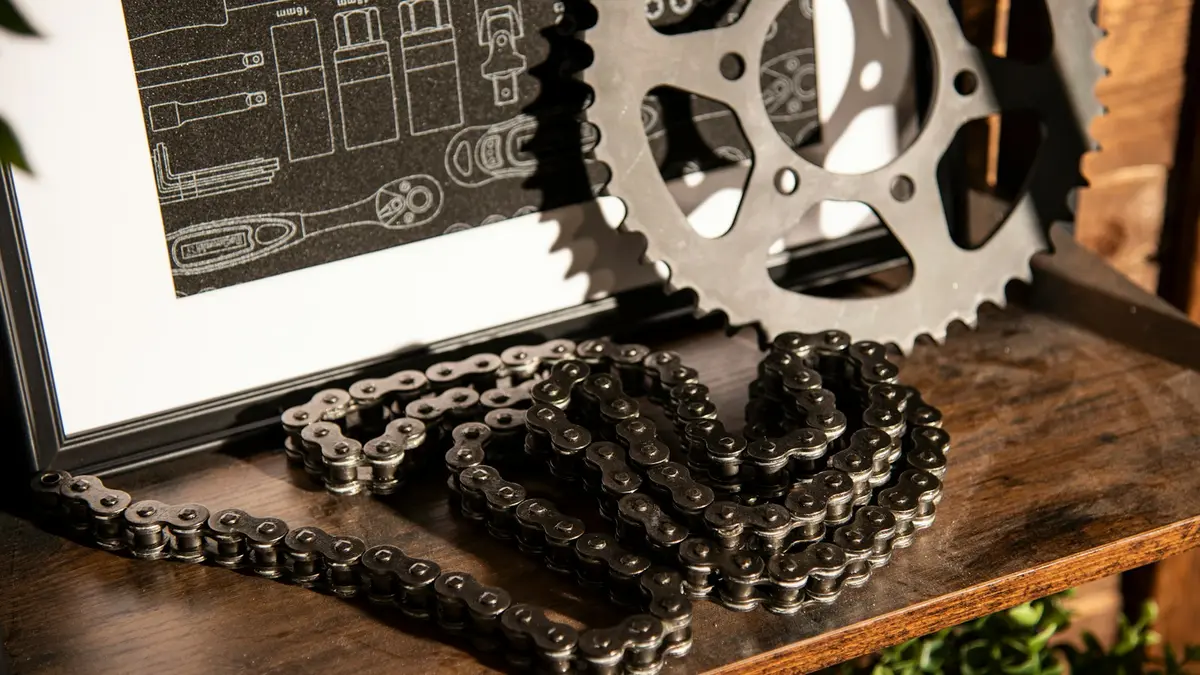
Source: Unsplash
Signs of a worn or stripped sprocket
A pruning chainsaw stripped sprocket may have teeth that are visibly rounded, chipped, cracked, excessively grooved, or missing. Metal dust, plastic debris, or an unevenly worn sprocket are also warning signs. The chain drive links should not be bent, badly worn, or packed with debris.
Reinstalling a damaged chain on a worn sprocket can quickly damage replacement parts. Oregon notes that maintaining the saw chain, guide bar, and drive sprocket together supports cutting performance and helps prevent damage and safety hazards. Oregon’s maintenance and safety manual also directs users to the saw manufacturer’s operator manual for chainsaw-specific operation and maintenance requirements.
Replace only parts listed for the exact model. On some pruning saws, the sprocket is a separately replaceable external part; on others, it is integrated into a drive assembly. The illustrated parts diagram or service parts list is the reliable way to tell which design you have.
Separate an external drive fault from an internal one
The key question is whether the chain-drive components are intact and free, or whether power is being lost inside the saw.
Likely external problem
An external repair is more likely when you find one of these conditions:
- Chain brake engaged or chain jammed in material
- Chain adjusted too tightly
- Debris blocking the bar, chain, or sprocket
- Chain not seated in the bar groove or on the sprocket
- Wrong chain size or damaged drive links
- Worn or stripped visible sprocket
- Broken or slipping chain-tensioner parts
These are often inspectable with the battery removed. Replace parts only if the manufacturer identifies them as user-serviceable and provides the correct procedure.
Likely internal drivetrain failure
Internal failure becomes more likely when the chain, bar, and visible sprocket are correctly installed and move freely by hand, yet the saw only whines during a normal, fully assembled test. Possible faults can include stripped reduction gears, a failed clutch or drive coupling, a damaged motor output gear, or a failed electronic drive component, depending on the saw design.
Do not open a sealed motor or gearbox housing unless the manufacturer’s service information specifically authorizes that work. A high-pitched whine can mean the motor is spinning while a gear train is slipping, but it cannot identify the failed internal part by sound alone.
When to stop troubleshooting and arrange service
Stop using the saw and seek authorized service or replacement guidance if you find cracked housings, melted plastic, a burning smell, exposed wiring, recurring chain derailment, broken guard parts, or internal grinding or rattling. The same applies when the saw is within warranty or when the parts diagram does not show the drive components as user-replaceable.
Before contacting service, record the model number, battery type, chain specification, and what you observed: whether the chain was jammed, whether the sprocket was damaged, and whether the chain moves freely with power removed. That helps distinguish a maintenance issue from a sealed-drive repair.
Prevent another chain-drive failure
Keep the bar groove, sprocket area, and cover clear of debris; check tension before cutting; and use only the specified chain. Avoid forcing a compact pruning saw through wood that pinches the bar. Inspect the chain, guide bar, and sprocket as a system rather than replacing only the most visibly worn part.
If the chain is sharp, correctly fitted, properly tensioned, and free to move by hand but the assembled saw still whines without moving it, treat the problem as an internal drive fault. Continuing to run it can turn a limited repair into a larger one.
References
- Chainsaw running but chain not moving. (n.d.). https://www.husqvarna.com/uk/support/husqvarna-self-service/why-won-t-my-chainsaw-chain-move-when-the-engine-is-running-ka-01711
- What is the problem if the chain of a chainsaw fails to move?. (n.d.). https://www.quora.com/What-is-the-problem-if-the-chain-of-a-chainsaw-fails-to-move
- Common Chainsaw Problems and How to Fix Them. (n.d.). https://www.bullcreekoutdoors.com/blog/common-chainsaw-problems-and-how-to-fix-them
- Chain won’t hold tension. Within seconds it either goes …. (n.d.). https://www.reddit.com/r/Chainsaw/comments/jp5nl6/chain_wont_hold_tension_within_seconds_it_either
- Chainsaw Maintenance Tips. (n.d.). https://www.homedepot.com/c/ah/chainsaw-maintenance-tips/9ba683603be9fa5395fab90f1d25ae0
- What to check when chainsaw chain won’t move freely?. (n.d.). https://diy.stackexchange.com/questions/298961/what-to-check-when-chainsaw-chain-wont-move-freely
- How to fix a chainsaw chain that won’t stay tight. (n.d.). https://www.appliancepartspros.com/b/how-to-fix-a-chainsaw-chain-that-wont-stay-tight
- Lithium-Ion MINI CHAINSAW. (n.d.). https://pdf.lowes.com/productdocuments/d5d47bb0-f4b2-4807-a486-9e6fd46a9ed6/62236759.pdf
- Oregon® Maintenance and Safety Manual. (n.d.). https://apps.oregonproducts.com/pdfs/OregonMMANUAL_EN_A106971ab.pdf
- Poulan Pro 18 Inch Chainsaw Grinding Noise and Repair. (n.d.). https://www.justanswer.com/small-engine/2pe72-chain-saw-makes-grinding-sound-when-try-cut-tree.html
 Mini Chainsaw vs. Reciprocating Saw for Pruning Branches
 Should You Sharpen or Replace Lawn Mower Blades?
 How to Trim Grass Along a Fence With a String Trimmer