Buy the mower that you can realistically get repaired, not simply the one with the most appealing specifications. Before paying, identify nearby authorized service locations, ask whether they work on the exact model you are considering, and confirm how you would transport the machine if it stopped working. A good warranty has limited value if the nearest authorized shop is far away, booked for weeks, or will not handle machines bought elsewhere.
Check support using the specific mower model number, not only the brand name. Also separate routine wear items from model-specific parts, and separate mower warranty coverage from engine, battery, or retailer support. That small amount of homework can prevent a mid-season breakdown from becoming a replacement decision.
Start With the Local Service Reality
A dealer locator is a starting point, not proof of local support. Manufacturer warranty policies commonly require work to be performed by an authorized dealer or service center. For example, Briggs & Stratton states that only an authorized dealer or installer can perform warranty repairs, while Husqvarna directs owners to return a product to the selling dealer or an authorized service center for warranty service. Briggs & Stratton warranty information and Husqvarna warranty information explain the process.
Call two nearby authorized locations before purchase. Give each shop the exact model number and ask:
- Are you currently authorized to perform warranty repairs for this model?
- Do you service mowers purchased from another retailer or online?
- Do you service both the mower and its engine or battery system?
- Do you stock routine maintenance parts, or order everything?
- During spring and early summer, what is the typical diagnostic and repair turnaround?
- Do you offer pickup and delivery, and what are the fees and service area?
- Is an appointment required for a warranty inspection?
A shop may sell a brand but not service every product line, or it may service the machine but not an engine made by another manufacturer. Get a clear answer before treating a pin on a dealer map as a repair option.
Check Parts by Category, Not by a General Promise
“Parts available” can mean anything from a blade on a shelf to a discontinued electronic controller that takes weeks to source. Evaluate the parts you are most likely to need separately.
Routine maintenance and wear parts
For a walk-behind mower, ask about blades, air filters, spark plugs, oil filters where applicable, drive belts, wheels, cables, bagging components, and mulch plugs. For a riding mower or zero-turn mower, add deck belts, spindle components, idler pulleys, tires, fuel filters, seat switches, deck wheels, and blades.
These items do not necessarily fall under a defect warranty. One manufacturer warranty policy, for example, specifically lists oil, lubricants, spark plugs, belts, and rubber hoses as normal service-replacement items rather than covered warranty items. Bad Boy warranty policy illustrates why buyers should read exclusions rather than assume all replacement parts are covered.
Model-specific and high-cost parts
Ask a shop to look up availability for a few model-specific components: the mower deck, transmission or drive system, electric-start parts, control module, wheel-drive assembly, battery charger, and battery pack if applicable. You do not need a price quote for every item. The useful question is whether the part has a current part number, is normally stocked by the manufacturer, and can be ordered through the shop.
Source: Unsplash
A current online parts diagram is helpful, but it is not a guarantee that every listed part is in stock. Verify that the model is current, that its manual and parts list are accessible, and that the dealer can actually order the parts. Some manufacturers limit support for older products; Murray, for example, says support for models built in 2005 or earlier is not available. Murray support shows why long-term support claims should be checked in writing.
Battery and charger support
For a cordless mower, investigate the battery platform as carefully as the mower itself. Confirm the battery model, charger model, warranty terms, and whether a local authorized center can diagnose battery-related faults. Ask whether the retailer, mower manufacturer, battery maker, or repair center handles a failed battery claim.
Do not assume batteries from other tools fit the mower. Confirm compatibility in the current mower manual and official product documentation. If the battery is removable, consider whether you can buy a replacement directly when the original warranty ends, rather than relying on a future repair decision.
Read the Warranty Process, Not Just the Warranty Length
Warranty coverage usually applies to defects in materials or workmanship under normal use and maintenance, not ordinary wear, damage, neglect, or maintenance supplies. Husqvarna describes this general distinction and requires proof of purchase for service. Husqvarna warranty information
Before buying, read the warranty document for these details:
- The coverage period for the mower, engine, battery, charger, and deck.
- Whether coverage differs for residential and commercial use.
- Whether registration is required and how soon it must be completed.
- Which defects are covered and which wear items are excluded.
- Whether you must use an authorized service center.
- Whether the original dealer must handle the claim or another authorized dealer may do so.
- Who pays transport, pickup, delivery, diagnosis, and routine maintenance costs.
- What records you must provide, including receipt, model number, and serial number.
Keep the receipt, warranty document, serial number, and maintenance records together. Registration can help preserve purchase information, but it may not replace the need for proof of purchase. Husqvarna notes that registered products still need reliable proof of purchase when presented for warranty service. Husqvarna warranty information
Also check whether the engine has separate coverage. Briggs & Stratton notes that engine warranty details may be in the engine documentation and that some engines may also be covered under the equipment manufacturer’s policy. Briggs & Stratton warranty information A mower problem may therefore require you to determine whether the issue is with the engine, mower frame, deck, drive system, or electrical system.
Ask About Turnaround Before Peak Season
Turnaround time is seasonal. A repair shop that can inspect a mower promptly in winter may be heavily booked when spring growth begins. Ask for the current typical time to diagnose a mower and the usual delay after parts are ordered. Treat the answer as a snapshot, not a promise.
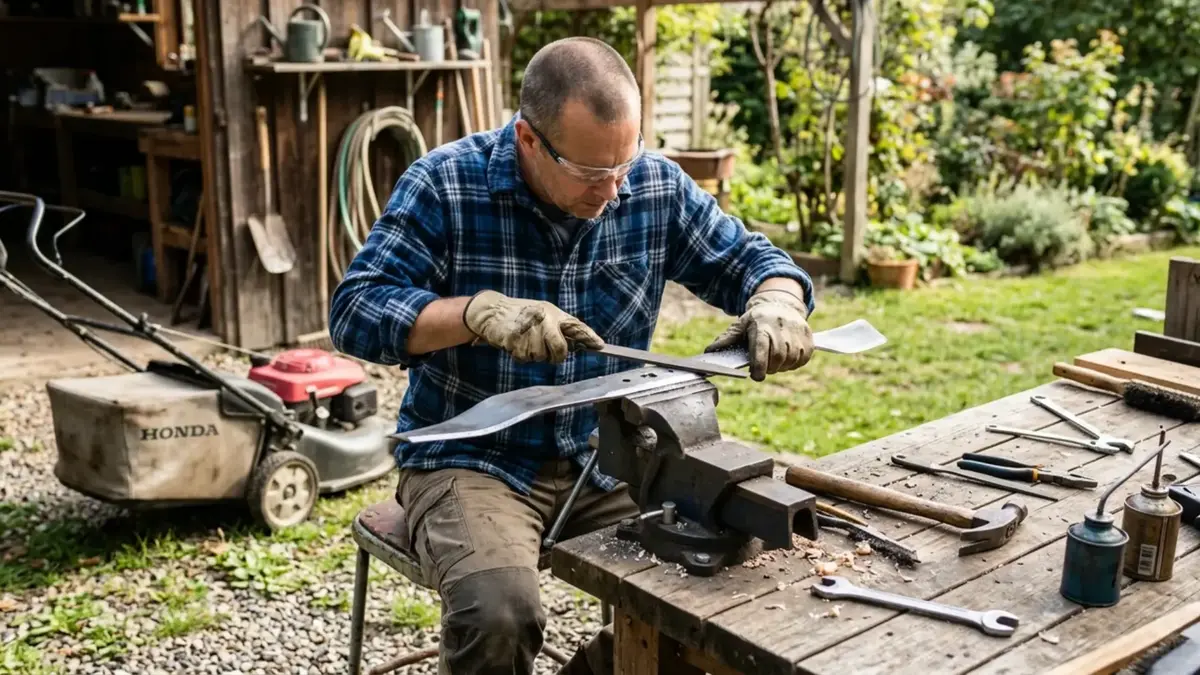
The best time to establish a service relationship is before the first breakdown. If a shop offers preseason maintenance, ask when to schedule it and whether it checks the wear parts you are most likely to need. Routine cleaning and blade care can reduce avoidable downtime; see how often to clean a lawn mower and sharpen or replace lawn mower blades for maintenance decisions.
For any major repair, request a written estimate that distinguishes diagnostic labor, parts, freight if applicable, and repair labor. Consumer Reports recommends obtaining a professional estimate when basic fixes do not resolve the problem, especially for larger machines that are difficult to inspect yourself. Consumer Reports repair-or-replace guidance can help frame the repair-versus-replace decision later.
Include Transport in the Purchase Decision
Transport is often the overlooked cost of mower service. A compact push mower may fit in a vehicle, but a riding mower usually requires a trailer, pickup, or dealer pickup service. Measure your vehicle and storage access, and ask the service provider how pickup works.
Clarify these points:
- Whether pickup and delivery are available for your address.
- The charge for each direction and whether it changes with distance.
- Whether the shop can collect a non-running mower.
- Whether warranty work changes the transport charge.
- Whether you need to remove accessories, grass bags, batteries, or fuel before transport.
- Whether the shop needs advance approval before a warranty inspection.
Follow the mower’s current operator manual for any preparation and transport instructions. Do not improvise loading, securing, fuel handling, or battery removal procedures. The correct process varies by mower type and battery design.
Compare the Retailer and Dealer Paths
A big retailer can be convenient for purchase, but its support process may route different faults to different contacts. Murray’s support instructions, for example, distinguish non-engine service issues from engine-related issues and direct owners to a dealer locator for engine concerns. Murray support This is a useful reminder to ask who owns each stage of support before buying.
A dedicated equipment dealer may provide setup, maintenance, parts-counter help, repair scheduling, and transport in one place. That does not automatically make it the better choice; compare the actual terms, distance, hours, service capacity, and fees. The strongest option is the one that gives you a workable local repair path for the exact mower you intend to own.
A Five-Minute Pre-Purchase Checklist
Before placing the order, complete these checks:
- Save the exact mower model number and locate its operator manual and parts diagram.
- Find at least one nearby authorized warranty service location and call it.
- Confirm that the shop services the exact model and accepts units bought from your intended seller.
- Ask about normal in-season turnaround and parts-order delays.
- Check availability for blades, filters, belts, drive parts, and—on cordless models—the battery and charger.
- Read the warranty exclusions, registration requirement, proof-of-purchase requirement, and transport terms.
- Decide how you will move the mower to service, or price the pickup and delivery option.
- Keep the receipt, serial number, and warranty information where you can find them.
A mower with ordinary features and dependable local support is often the lower-hassle ownership choice. Evaluate the machine, but also evaluate the path from a future problem to a completed repair.
References
- Should You Repair or Replace Your Broken Lawn Mower? - Consumer Reports. (n.d.). https://www.consumerreports.org/home-garden/lawn-mowers/should-you-repair-or-replace-your-broken-lawn-mower-a9568997026
- Wright Mower and Accessory Warranty Information. (n.d.). https://www.wrightmfg.com/articles/wright-mower-and-accessory-warranty-information
- Bad Boy Zero Turn Mower & Tractor Warranty Policy Info. (n.d.). https://badboycountry.com/warranty-information
- Support | Murray. (n.d.). https://www.murray.com/en-us/support
- Warranty Information | Coverage Details | Authorized Dealers | Briggs & Stratton. (n.d.). https://www.briggsandstratton.com/en-us/support/warranty
- Husqvarna Products Warranty Information | Husqvarna US. (n.d.). https://www.husqvarna.com/us/support/warranty
- Warranty Service on Mowers? : r/Greenworks. (n.d.). https://www.reddit.com/r/Greenworks/comments/1kydu8v/warranty_service_on_mowers
- “Lawn Mower Repairs and Sales, Snow Blowers, Trimmers, Blowers”. (n.d.). http://www.mowersandmoreinc.com
- Riding Mower Extended Warranty Plans - Lawn Equipment Protection. (n.d.). https://www.surebright.com/sub-category/riding-lawnmowers
- Northwest Lawn & Power Equipment | Small Engine Repair | Itasca. (n.d.). https://www.northwestlawnandpower.net
 Can a Lawn Mower Mulch Leaves and Run Over Small Twigs?
 Should You Sharpen or Replace Lawn Mower Blades?