A string trimmer can clean up the narrow strip a mower leaves along a fence, but the key is to skim the grass beside the fence rather than strike the fence with the line. Mow the open lawn first, then work the remaining strip in short, controlled passes with the head held level or only slightly tilted. Keep the line just off the fence and let its outer cutting edge reach the grass.
For a neat result, stand so debris is thrown away from the fence, windows, vehicles, and people. Use moderate power and advance slowly. If the fence is delicate, painted, vinyl-coated, newly stained, or surrounded by stones, irrigation parts, or wiring, leave the last bit for hand shears instead of trying to force the trimmer closer.
Start With a Clear Fence Line
Walk the full length before starting. Pick up rocks, sticks, wire, toys, and other debris that could be thrown or wrapped around the head. Look for loose fence hardware, exposed irrigation tubing, landscape-lighting wire, holes, and low branches. Cornell’s string-trimmer safety guidance specifically recommends clearing debris and checking the area for hazards before trimming. Cornell University
Then mow as close as your mower safely allows. Leaving a narrow strip for the trimmer is preferable to repeatedly crowding mower wheels or a mower deck against the fence.
Before operating, check that the guard is installed and secure, the line is the proper length for the guard, and the throttle and stop control work correctly. Hold the trimmer with both hands and keep the head below waist height. Illinois Municipal League
Wear Basic Protective Gear
Fence lines often hide gravel, metal fragments, dry sticks, and other debris. Wear impact-rated eye protection, sturdy closed-toe footwear with slip-resistant soles, long pants, and hearing protection when required for your equipment. Keep other people and pets out of the work area; Cornell advises maintaining a 15- to 20-foot separation from bystanders. Cornell University
Use the shoulder strap if your trimmer is supplied with one. It helps support the tool and makes it easier to keep a consistent cutting height.
The Basic Technique: Skim Along the Boundary
1. Begin with the head level
Hold the cutting head roughly parallel to the ground, as you would for ordinary trimming. Position yourself so the fence is at the far edge of the cutting circle, not directly under the center of the head.
Keep a small gap between the line and the fence. The line extends beyond the head, so you can cut grass touching the fence without repeatedly contacting the fence itself.
2. Use the outside edge of the line
Move along the fence in short sections. Sweep the trimmer in a shallow arc and allow the outer portion of the line to clip the grass at the base of the fence.
Do not shove the head forward until the line is constantly buzzing against posts, rails, or mesh. That wastes line, increases debris, and can scar or weaken some fence surfaces. Work one pass near the fence, then make a second light pass only where grass remains.
Source: Unsplash
3. Tilt slightly only when needed
A slight tilt can help the line reach grass leaning against the fence. Tilt the head only enough to direct the cutting edge toward the base of the fence while keeping the guard between you and the likely debris path.
Avoid turning the whole trimmer fully vertical unless your model is specifically designed to convert to an edging position. Some trimmers have an invertible head for vertical edging, but that feature is intended for defined lawn edges and should be used only as described in the current operator’s manual. Top Ten Reviews
For most fence lines, a mostly level head with a mild tilt gives better control than a fully vertical orientation.
4. Use brief throttle bursts near obstacles
Run the trimmer only as hard as needed to cut the grass. Brief, controlled throttle bursts can provide more control near targets than holding full power continuously. Cornell University
Slow down around posts, gates, braces, and corners. If tall weeds are present, reduce them from the top down first, then finish the base. This can reduce wrapping and tangling. Buffalo State University
How to Trim Along a Chain-Link Fence
Chain-link is usually more forgiving than painted wood or vinyl, but it is hard on trimmer line. The mesh can catch the line, fray it, or break it if you push the head into the fence.
Start with a normal pass beside the fence, keeping the line just clear of the wire. For grass growing through the lower mesh, approach slowly with light power and let the line touch only briefly if necessary. Move on rather than holding the line in one place.
Do not try to thread the spinning line through chain-link openings or force it around every wire intersection. The result is usually rapid line wear, poor control, and more chance of flinging debris. Hand shears, a hand weeder, or a narrow hoe are better for persistent weeds woven into the mesh.
Protect Different Fence Materials
Wood fences
Avoid prolonged contact with wood, especially on painted, stained, weathered, or pressure-treated boards. Repeated line strikes can leave pale scars, remove finish, and roughen the surface. Leave a narrow uncut margin if necessary, then finish it by hand.
Vinyl and composite fences
Use extra caution. Spinning line can scuff the surface, dull its finish, or leave visible marks. Hold the trimmer farther away than you would beside bare metal fencing and use hand shears for grass tight against the bottom rail.
Metal and chain-link fences
The fence may tolerate incidental contact, but the line will not. Light contact is less damaging than forcing the line into wire, posts, or brackets. Watch for sharp wire ends and loose components.
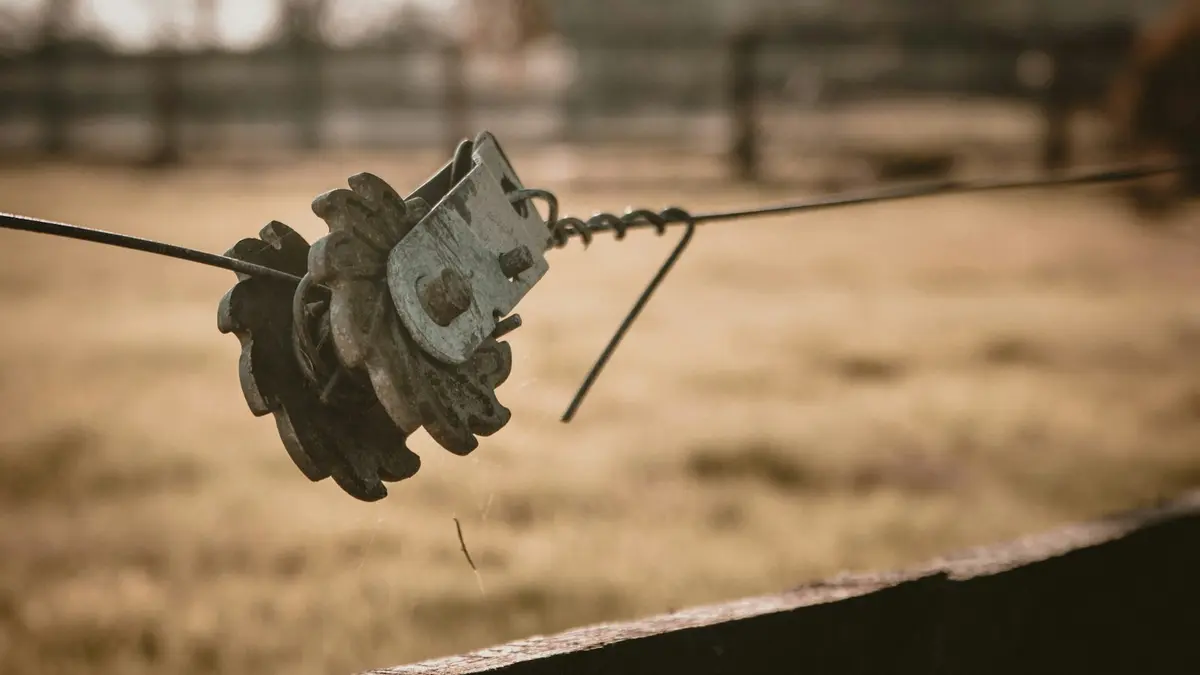
Wire or electric fences
Do not trim around an energized electric fence unless you have followed the fence manufacturer’s instructions and made the area safe. Avoid striking wires, insulators, connectors, or grounding components. If you cannot clearly identify the components at the base of the fence, use hand tools instead.
Choose Line for Control, Not Maximum Aggression
Use the line type and diameter approved in your trimmer’s current manual. Heavier line is not automatically better at a fence: it can strike harder, throw more debris, and make delicate surfaces easier to damage.
Fresh line cut to the guard’s intended length is easier to control than an oversized line loop. Replace badly frayed line before it becomes uneven enough to cause vibration. Stop and inspect the tool if you notice unusual vibration. Illinois Municipal League
Avoid fitting metal blades or unapproved cutting attachments merely to clear a fence line. Attachment compatibility, guarding, operating limits, and required protective equipment must come from the trimmer manufacturer.
Direct Debris Away From the Fence
Before beginning, run the trimmer briefly in an open area and observe where it tends to discharge clippings and loose debris. Adjust your walking direction and stance so the discharge side faces open lawn where possible, rather than the fence, a window, a vehicle, or a neighboring property.
Keep the guard in place. It is part of the tool’s debris-control system, not an obstacle to remove for closer cutting. Confirm the guard and shields are secure before use. Illinois Municipal League
If gravel, decorative stone, or mulch sits against the fence, do not sweep the trimmer into it. Stones can be thrown, and mulch can be scattered. Finish those spots by hand.
When Hand Tools Are the Better Choice
Put down the string trimmer and use hand shears, a grass hook, or a hand weeder when:
- Grass is tightly wrapped around chain-link mesh or hardware.
- The fence is vinyl, freshly painted, stained, or otherwise easy to mark.
- Stones, landscape lights, irrigation tubing, or wires are mixed into the grass.
- Weeds are growing directly against posts, gates, or bottom rails.
- The ground is wet, steep, uneven, or too cluttered for stable footing.
- You need a crisp finish around a visible front-yard fence.
A few minutes of hand work is usually faster than replacing broken line or repairing a scuffed fence.
Finish and Maintain the Area
After trimming, inspect the fence line for wrapped grass, displaced mulch, damaged irrigation parts, or loose hardware. Shut the trimmer off and wait for the head to stop completely before clearing grass from the guard or head. Do not rely on idle speed alone to mean the cutting head cannot move. Buffalo State University
For a fence that needs frequent trimming, consider creating a narrow maintenance strip of mulch, paving, or another suitable barrier beside it. Keep mulch from being piled against wood fencing, and plan any gravel strip so it will not be struck by mowing or trimming equipment.
The most reliable fence-line method is simple: mow first, trim slowly, keep the line just off the fence, and use hand tools wherever the risk of damage is greater than the benefit of a closer pass.
References
- String Trimmer Fence Damage: Prevention Tips. (n.d.). https://truelinefencesco.com/2026/08/18/string-trimmer-fence-damage
- Tips To Trim Grass Around A Chain Link Fence. (n.d.). https://eprivacylink.com/tips-to-trim-grass-around-a-chain-link-fence
- Walk Behind String Trimmer - OPERATOR’S MANUAL. (n.d.). https://images.thdstatic.com/catalog/pdfImages/1e/1ef3d202-074f-415e-965a-124107eb3391.pdf
- String Trimming Fence Lines. (n.d.). https://www.tiktok.com/@southscapeco/video/7474427053626887466
- String Trimmer Toolbox Talk | Environment, Health and Safety. (n.d.). https://ehs.cornell.edu/campus-health-safety/occupational-safety/tool-and-machine-safety/string-trimmer-toolbox-talk
- STRING TRIMMER SAFETY. (n.d.). https://www.iml.org/page.cfm?key=35141
- Safe Operation of a String Trimmer. (n.d.). https://www.wvltap.org/tailgate/safe-operation-of-a-string-trimmer
- EASY Method // Weed Eat Around Chain Link Fence. (n.d.). https://www.youtube.com/watch?v=V-82OJYD-OQ&xstg=CAMSBhUDzO3xHw%3D%3D
- 10 uses for a string trimmer: from lawn edging to cutting weeds | Top Ten Reviews. (n.d.). https://www.toptenreviews.com/uses-for-a-string-trimmer
- Safe Operation and Servicing of String Trimmers, Lawn …. (n.d.). https://environmentalhealth.buffalostate.edu/sites/environmentalhealth/files/documents/mowerandtrimmersafetyrev2.pdf
 How to Choose a Lightweight String Trimmer When Bending Is Difficult
 Which Yard Tools Should You Buy First? A Task-Based Priority Guide
 Mini Chainsaw vs. Reciprocating Saw for Pruning Branches