Electric lawn mowers are lower maintenance than gas models, not zero-maintenance machines. You do not have engine oil, fuel, filters, or spark plugs to manage, but grass buildup, a dull or damaged blade, loose hardware, worn wheels, blocked cooling openings, and poor battery storage can still hurt cutting performance and shorten component life.
The practical routine is simple: clean the mower after use, inspect it regularly, keep the blade in good condition, and store the mower and battery dry. Before cleaning, clearing a blockage, or inspecting the underside, stop the mower, remove the battery or disconnect the power source as your model directs, and wait for all moving parts to stop. The current owner’s manual is the controlling source for your mower’s cleaning method, blade service, charging, and storage instructions.
What electric mowers still need
Most electric mower maintenance falls into five areas:
- Remove grass, soil, and debris from the deck and discharge path.
- Inspect the blade and cutting system for dullness, damage, and secure mounting.
- Check wheels, handles, guards, grass catcher parts, and visible fasteners for wear or looseness.
- Keep cooling vents, battery contacts, and charger connections clean and dry.
- Store the mower and removable battery in suitable dry conditions.
A mower that suddenly has reduced runtime or struggles in grass does not automatically have a failing battery. A packed deck, obstructed airflow, or dull blade can increase the load on the motor. Start with the simple inspection and cleaning work before assuming an electrical fault.
After each mow: the short maintenance routine
Remove the power source first
For a cordless mower, remove the detachable battery and any safety key if your model uses one. For a corded mower, unplug it from the outlet. Do not rely solely on the handle control being released.
Keep the battery away from the cleaning area, and do not clean a battery pack or charger with water. If you are unsure how to disable the mower for service, follow the procedure in the current manual.
Clear the deck and discharge area
Grass clippings collect under the deck, around the blade area, in the discharge chute, and near the grass catcher connection. Letting wet grass dry into a heavy layer can restrict discharge and make later cleaning harder.
Use a brush, plastic scraper, or dry cloth to remove loose debris. Wear the protective equipment specified in the mower manual when working near the blade. Avoid putting hands into the deck opening or chute until the mower has been disabled and the blade has fully stopped.
Do not assume a hose is acceptable. Some manufacturers specifically warn against hosing down electric mowers because water can reach electrical connections or the motor area. A damp cloth and brush may be appropriate for many models, but the manual decides whether any wash-down method is permitted.
Wipe the outside and check airflow openings
Wipe grass and dust from the housing, handle area, and exterior surfaces. Make sure ventilation and cooling air openings are not plugged with clippings. Keep handles clean and free of oily residue so the mower remains easy to control.
If the mower uses a grass bag or catcher, empty it and look for tears, broken frames, damaged latches, or clogged mesh. A damaged catcher, discharge cover, mulch plug, or trailing shield should be replaced with the correct part rather than improvised repairs.
Inspect the blade regularly
A sharp blade cuts grass cleanly. A dull blade tends to tear it, which can leave ragged, browning grass tips. A damaged or bent blade can create vibration and should not be treated as an ordinary sharpening job.
What to look for
With the mower safely disabled, inspect the blade and visible mounting hardware for:
- Rounded or chipped cutting edges
- Cracks, bends, heavy corrosion, or missing material
- Packed grass around the blade and deck
- A loose-looking blade bolt or cutting assembly
- Unusual vibration noticed during the previous mow
Replace a blade that is cracked, bent, severely worn, or otherwise damaged. Use only the blade and mounting parts approved for the specific mower model. Blade shape, mounting pattern, thickness, and cutting system design are not universal.
Sharpening and balancing
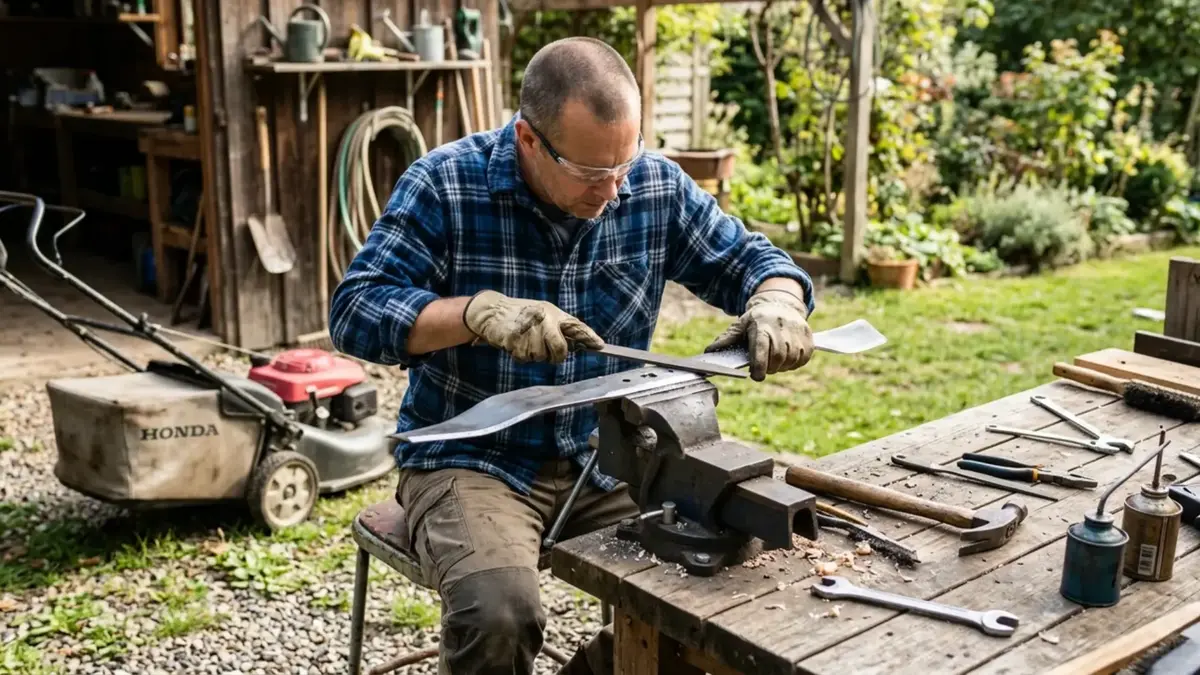
Many mower blades can be sharpened if they are still in sound condition, but the manual should guide removal, reinstallation, and any replacement criteria. A blade must remain properly balanced after sharpening; an unbalanced blade can cause vibration and add stress to the mower.
If you are not equipped to inspect, sharpen, and balance a blade correctly, have a qualified service provider do the work. For more detail on deciding between blade service and replacement, see sharpen or replace lawn mower blades.
Do not guess at blade-bolt tightening requirements. Use the current manufacturer instructions for the proper parts and procedure.
Check the mower beyond the blade
Wheels, handles, and hardware
At least periodically during the mowing season, inspect the wheels, height-adjustment mechanism, folding handle joints, and visible fasteners. Look for cracks, wobble, missing hardware, or parts that no longer lock securely.
Some mower models have wheel bearings or other points that require seasonal lubrication; others do not. Apply lubricant only where and with the product specified in the manual. Adding oil or grease to the wrong location can collect debris or damage components.
Safety parts and controls
Check that the handle controls return normally, the grass catcher or discharge components fit securely, and guards or covers are not cracked or missing. Do not bypass a safety key, interlock, guard, or control to keep mowing.
If the mower has been dropped, struck a hard object, run into a hidden obstruction, or developed new vibration or noise, stop using it until you have inspected it according to the manufacturer’s instructions. Damage may not be limited to the blade.
Corded mower extra check
A corded electric mower has no removable battery to maintain, but its power cord needs attention. Before use, inspect the cord, plug, strain relief, and extension-cord connection for damage. Do not operate a mower with damaged electrical parts. Verify the manufacturer’s requirements for extension-cord type, length, and outdoor use rather than assuming any household cord is suitable.
Battery lawn mower maintenance
Battery care matters because the battery pack and charger are specialized electrical components. Follow the instructions supplied with the exact battery and charger; battery practices can differ between mower platforms and generations.
Keep contacts clean and dry
Check the battery case, terminals, and mower battery compartment for grass, dirt, moisture, corrosion, cracks, swelling, or other visible damage. Clean loose debris gently with a dry cloth or soft brush unless the manual specifies another method.
Do not use a damaged, leaking, swollen, or unusually hot battery pack. Do not try to open or repair a battery pack yourself. Contact the manufacturer or an authorized service provider for the correct next step and local recycling or disposal options.
Charge under the specified conditions
Use the charger intended for the battery system and charge in the environment described in the manual. Extreme temperatures can affect charging and battery performance, so do not assume an unheated shed, hot garage, or direct sun is acceptable.
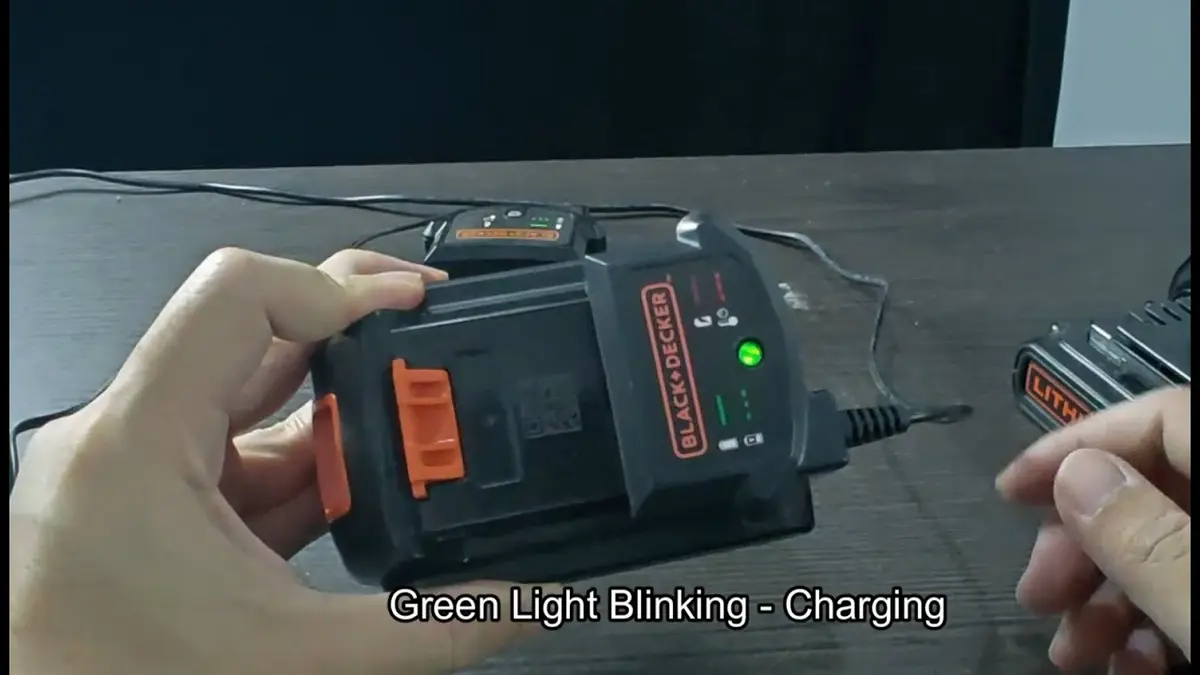
If a battery or charger will not charge, first inspect for dirt, moisture, or obvious damage and consult the troubleshooting section of the manual. Repeatedly forcing a questionable battery or charger into service is not a maintenance solution.
Avoid unnecessary strain while mowing
A clean deck and sharp blade help the mower work efficiently. In heavy or tall grass, adjust your mowing approach as the manual permits: a higher cutting setting, slower walking pace, or multiple passes may reduce overloads. Stop to clear buildup only after disabling the mower.
Cordless mower winter storage
End-of-season storage is where the “just charge it” assumption most often causes trouble. Clean and dry the mower first, inspect the blade and hardware, and address damaged parts before putting it away. A spring repair is easier when you know the mower was stored clean and intact.
Store the battery separately
Remove the battery from the mower for long-term storage if the manufacturer directs it. Keep the battery in a clean, dry location away from moisture, direct sun, heat sources, metal objects, and conditions outside the approved storage range.
The correct storage charge level is model-specific. Some manufacturers provide a charge range or indicator guidance for extended storage; others have different instructions. Check the battery manual rather than automatically storing every pack fully charged or fully depleted.
Inspect the stored battery periodically as directed. If its status indicators, condition, or behavior suggest a problem, stop using it and follow the manufacturer’s service guidance.

Source: Unsplash
Store the mower dry and stable
Store the mower in a dry, sheltered place where it cannot fall, be knocked over, or be exposed to leaks. Make sure the deck is dry before storage to limit corrosion and hardened grass buildup.
Many electric mowers can be folded or stored vertically, but only if the manual expressly allows that position and explains how to secure it. Do not lean a mower into a position that could damage the handle, battery compartment, cable, or controls.
A practical seasonal checklist
Before the mowing season
- Read any seasonal-start instructions in the current manual.
- Inspect the housing, wheels, handles, catcher, guards, and visible hardware.
- Check the blade for wear or damage and service it if needed.
- Clean the deck and discharge route.
- Inspect the battery, charger, contacts, or power cord.
- Test controls only as the manufacturer instructs, in a clear area.
During the season
- Remove clippings from the deck and chute after mowing.
- Keep vents and exterior surfaces clear.
- Watch for worsening cut quality, vibration, unusual noise, or reduced mowing performance.
- Check blade condition, wheel security, and catcher parts periodically.
At the end of the season
- Deep-clean and dry the mower.
- Inspect or service the blade.
- Check for worn or damaged parts and arrange replacements.
- Remove and store the battery as directed.
- Store the mower in a dry, stable location.
When to stop and seek service
Stop using the mower and consult the manufacturer, an authorized repair provider, or a qualified technician if you find a cracked housing, bent blade, damaged blade mount, broken guard, damaged cord, battery swelling, liquid leakage, burning smell, repeated overheating, or unexplained vibration.
Electric mower maintenance is mostly basic housekeeping: keep it clean, dry, sharp, secure, and properly stored. The important exception is that blade, battery, charger, and electrical-system work has model-specific limits. When the manual conflicts with general advice, follow the manual.
References
- How to store your cordless lawn mower for the winter - Ego Power+. (n.d.). https://egopowerplus.co.uk/ego-news/how-to-store-your-cordless-lawn-mower-for-the-winter
- Battery Lawn Mower Maintenance Guide 2025 | Greenworks Canada – Greenworks Tools Canada Inc.. (n.d.). https://greenworkstools.ca/blogs/news/battery-lawn-mower-maintenance-tips
- The basics of cordless lawn mower maintenance - Ego Power+. (n.d.). https://egopowerplus.eu/node/3127
- Efficient Lawn Mower Maintenance: 7 Essential Tips!. (n.d.). https://theownerbuildernetwork.co/gardens/2024/01/17/lawn-mower-maintenance-tips
- How to Store Lawnmower Batteries in the Winter. (n.d.). https://www.rdbatteries.com/blog/post/how-to-store-lawnmower-batteries-in-the-winter.html
- Lawn Mower Maintenance Tips | ECHO. (n.d.). https://www.echo-usa.com/tips/lawn-mower-maintenance
- 7 Tips for Battery-Powered Equipment Care | Vanguard. (n.d.). https://www.vanguardpower.com/en-us/lithium-ion-battery-systems/power-transition-center/7-tips-for-taking-care-of-battery-powered-equipment
- How Long Do Cordless Lawn Mower Batteries Last? (And How to Extend It) | Lymow Tech. (n.d.). https://www.lymow.com/blogs/why-lymow/how-long-do-cordless-lawn-mower-batteries-last-and-how-to-extend-it
- Electric Mower Maintenance Tips: Extend Performance and …. (n.d.). https://www.titantec.com/blog/electric-mower-maintenance-tips
- Essential Maintenance Tips for Electric Lawn Mowers …. (n.d.). https://powersmartusa.com/blogs/powersmart-blog/essential-maintenance-tips-for-electric-lawn-mowers-every-owner-should-know
 How Often Should You Clean and Maintain a Lawn Mower?
 Why a Cordless Tool Battery Will Not Charge
 Should You Sharpen or Replace Lawn Mower Blades?