A drill-powered circular saw attachment is a legacy accessory that uses a hand drill as its motor to spin a small saw blade. If you have found or inherited one, treat it first as an unknown machine—not as a safe substitute for a purpose-built circular saw. Unless you have the attachment’s original instructions, confirmation that it is complete, and a current safety assessment, display, collection, or non-operating restoration is usually the prudent choice.
The main concern is not merely that the tool is old. A circular saw concentrates several hazards—an exposed spinning blade, potential kickback, workpiece movement, and the need for reliable control. A purpose-built saw is engineered as one system: motor, handles, shoe, blade guard, depth setting, switch, and blade mounting. A circular saw attachment for a drill divides that system between two tools and may offer less secure control, less guarding, and less predictable cutting performance.
What a drill-powered circular saw attachment is
These attachments were sold to let an electric drill drive a circular blade through a geared or direct-drive arbor. Some vintage examples include a compact shoe or base and a partial blade guard; others vary substantially in layout and completeness. A vintage listing describes one Cummins attachment as having been manufactured by Pemco for Cummins, illustrating that these were marketed accessories rather than improvised blade mounts. See the listing.
Their intended role was generally light, occasional cutting where the owner already had a drill. That historical purpose does not establish that a surviving example is safe, complete, or suitable for present-day work.
Do not confuse a purpose-made attachment with putting a bare circular-saw blade directly in a drill chuck. A blade mounted directly in a chuck has no engineered shoe, guard arrangement, blade retention system, or cutting controls appropriate to a circular saw. Do not attempt that setup.
Why an attachment is not equivalent to a circular saw
A dedicated circular saw is designed for cutting loads and handling forces that are different from drilling. Its shoe helps support the tool on the material and helps establish cutting depth. Its handles are placed so the operator can resist twisting and kickback while keeping hands away from the blade. Its switch is intended to be controlled while the saw is held in a normal cutting position.
With a power drill saw attachment, the drill body may sit high, behind, or off to one side of the blade. That can affect balance and the direction in which the tool tries to move when the blade contacts the wood. The drill’s trigger and locking arrangement may also be awkward to manage during a cut, especially if the attachment requires both hands for stability.
The condition and design of the shoe matter as much as the blade. A bent, cracked, loose, or poorly aligned base can cause the blade to enter the material at an angle. That increases the chance of binding. Binding can lead to abrupt movement of the tool or workpiece.
The safety features to look for—and why missing ones matter
For portable power-driven circular saws in construction work, federal regulations require guards above and below the base plate or shoe. The lower guard must return automatically and instantly to cover the blade when the tool is removed from the work. 29 CFR Part 1926, Subpart I describes these requirements.
That regulation does not turn every old attachment into a legal or illegal homeowner tool, and workplace rules can vary by setting. It does show the safety baseline expected of a portable circular saw: the blade needs guarding above and below the shoe, and exposed teeth should be covered automatically when the cut ends.
Do not operate an attachment if any of these conditions applies:
- The upper guard, lower guard, guard spring, shoe, arbor hardware, or blade-retaining parts are missing, damaged, loose, or modified.
- A lower guard sticks, fails to return fully, or leaves more blade exposed than the attachment’s original design intended.
- The blade wobbles, rubs a guard, contacts the shoe, or does not run true when turned by hand with the drill disconnected from power.
- The drill cannot be held securely without placing a hand near the blade or without depending on a trigger lock.
- You cannot identify the intended blade size, arbor arrangement, rotation direction, or compatible drill from original documentation.
- The attachment has cracks, severe corrosion, worn gearing, stripped threads, damaged cords, or uncertain electrical condition.
A guard is not an optional convenience. The Canadian Centre for Occupational Health and Safety advises users of circular saws to check that the retracting lower guard moves freely and covers the unused portion of the blade. It also advises against using damaged, warped, or bent blades. CCOHS circular-saw guidance.
Trigger control and the problem with a drill as the motor
A drill trigger is designed around drilling, where the user normally grips the drill handle and controls speed with one finger. A saw attachment may change the grip, orientation, and balance enough that the trigger is no longer easy to release immediately while maintaining control of the tool.
Do not defeat, tape, wire, or otherwise hold a drill trigger on to run a saw attachment. A tool that cannot be promptly shut off while it is under control is not suitable for use. If an attachment’s original operating method depends on a drill’s trigger lock, verify the arrangement in the original manual and applicable workplace rules before considering operation.
The drill itself also needs inspection. Check its cord, plug, housing, chuck or drive connection, switch, and any locking feature. If the drill is corded, keep its cord away from the cutting path. CCOHS specifically identifies cord clearance as part of circular-saw safety. CCOHS circular-saw guidance.
Blade speed, blade fit, and cutting capacity are not assumptions to make
Do not assume that a blade fitting physically onto an arbor makes it suitable. Blade diameter, arbor hole, blade thickness, tooth style, rotation direction, and the attachment’s guard clearances must all match the original design. A blade can contact a guard or shoe, run out of true, or create a cutting load the attachment was not designed to handle.
Likewise, do not select a drill or blade by guessing at RPM, torque, battery capability, or chuck capacity. The supplied information does not provide manufacturer documentation for a particular attachment model, its approved drill speed range, its permitted blade specifications, or its maximum cutting depth. Those details must come from the original attachment manual, the drill manufacturer’s documentation, and the blade manufacturer’s markings and instructions.
A drill-powered saw attachment should never be tested by making a cut simply to see whether it works. If documentation is unavailable, the safer conclusion is that its operating limits cannot be verified.
Workholding is especially important
A circular saw can move suddenly when the blade pinches or the offcut shifts. That makes unsupported wood, unstable sawhorses, and hand-held stock especially risky. The workpiece must be supported so it cannot move, sag into the blade, or close the kerf behind it.
Purpose-built circular-saw guidance emphasizes stable footing, keeping clear of likely kickback paths, using both hands for control where the saw design allows, and clamping work that could move. West Fraser’s circular-saw safety guidance also notes that shallow blade exposure and secure workholding help reduce risk.
With a vintage drill powered saw, do not assume you can safely duplicate a standard circular-saw technique. The attachment’s unusual balance, handle position, and guard design may make normal guidance difficult or impossible to apply. If you cannot keep the work stable and maintain secure control without reaching near the blade, do not make the cut.
Restoration versus putting it back into service
An old attachment can be worth preserving even when it should not be operated. Cleaning surface dirt, documenting markings, photographing its parts, and storing it with its original accessories are reasonable preservation steps. Avoid cosmetic restoration that hides cracks, missing parts, or altered fasteners.
Operational restoration is a different standard. It requires more than making the tool look complete. Before any use, a qualified repair professional would need to establish that the assembly is mechanically sound, correctly guarded, correctly aligned, and compatible with a specified drill and blade. Original instructions are important because attachment designs differ.
For many owners, replacement is the safer and more practical choice. A current purpose-built circular saw provides an integrated shoe, expected guard behavior, dedicated controls, and manufacturer instructions for its blade system. If the needed work is a small or occasional cut, another appropriate modern tool may be safer than reviving an undocumented attachment.
A practical decision checklist
Keep the attachment for display, parts identification, or non-operating restoration if any critical information or safety component is missing.
Consider professional evaluation only if all of the following are true:
- The attachment is complete and has no visible damage or questionable modifications.
- Its original manual or reliable manufacturer documentation identifies the correct drill, blade, arbor parts, rotation direction, guard configuration, and operating limits.
- The guard system functions as designed.
- The drill and attachment can be controlled without bypassing the trigger or placing hands near the blade.
- The intended cut can be made with stable support and secure workholding.
If any answer is no or uncertain, do not use it. An inherited drill powered circular saw attachment can be an interesting example of tool history, but uncertainty around a spinning saw blade is a reason to stop—not a reason to experiment.
For general care of a modern saw, see circular saw blade maintenance. For the underlying reason a cut can become unstable, see why wood binds when cutting with a saw.
References
- Vintage Drill-Powered Circular Saw Attachment Tool …. (n.d.). https://www.ebay.com/itm/298471759127
- 🌡️ 10 Amazing DRILL Powered Tools. Drill attachments. (n.d.). https://www.youtube.com/watch?v=WYQ-0DgqYPc
- r/Tools - Power drill circular saw. (n.d.). https://www.reddit.com/r/Tools/comments/1hwla3r/power_drill_circular_saw
- 1910.243 - Guarding of portable powered tools. | Occupational Safety and Health Administration. (n.d.). http://www.osha.gov/laws-regs/regulations/standardnumber/1910/1910.243
- CCOHS: Powered Hand Tools - Saws - Circular. (n.d.). https://www.ccohs.ca/oshanswers/safety_haz/power_tools/saw_circ.html
- Why is it dangerous to attach a circular saw blade …. (n.d.). https://www.quora.com/Why-is-it-dangerous-to-attach-a-circular-saw-blade-to-a-power-drill-and-what-could-go-wrong-if-you-try-it
- eCFR :: 29 CFR Part 1926 Subpart I – Tools—Hand and Power. (n.d.). https://www.ecfr.gov/current/title-29/subtitle-B/chapter-XVII/part-1926/subpart-I
- Circular Saw Safety | West Fraser - Integrated Forestry Company. (n.d.). https://osb.westfraser.com/blog/circular-saw-safety-tips
- How to attach a circular saw blade to my power drill. (n.d.). https://www.quora.com/How-can-I-attach-a-circular-saw-blade-to-my-power-drill-I-need-to-make-about-a-half-dozen-cuts-lengthwise-to-some-1x2x16-wood-and-dont-want-to-buy-a-table-saw-or-a-jigsaw
- How to Use a Circular Saw. (n.d.). https://www.homedepot.com/c/ah/how-to-use-a-circular-saw/9ba683603be9fa5395fab90675ca109
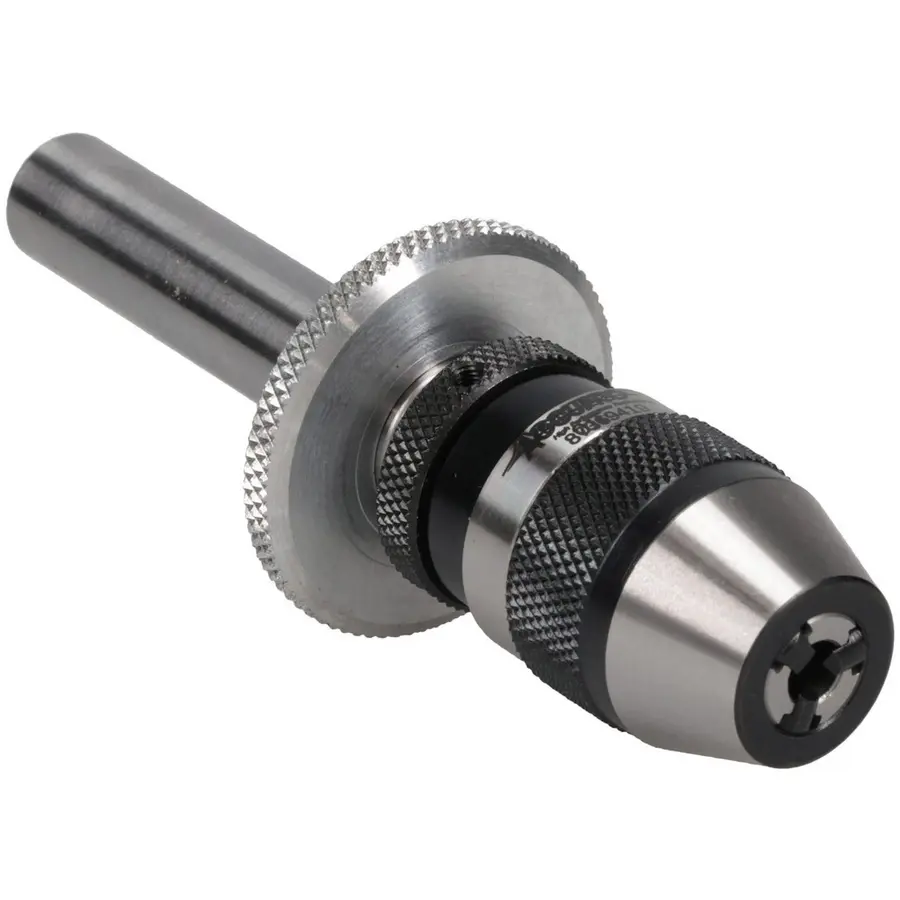 How to Tell Whether a Drill Attachment Is Compatible With Your Drill
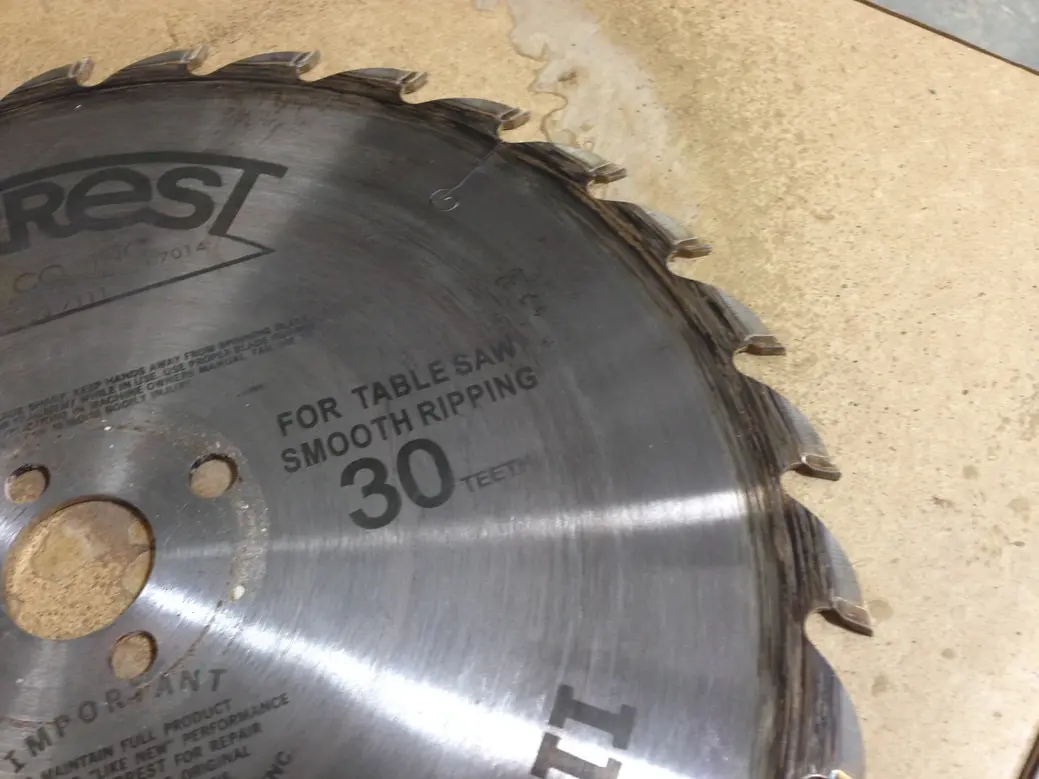 Circular Saw Blade Maintenance: Clean, Sharpen, or Replace?
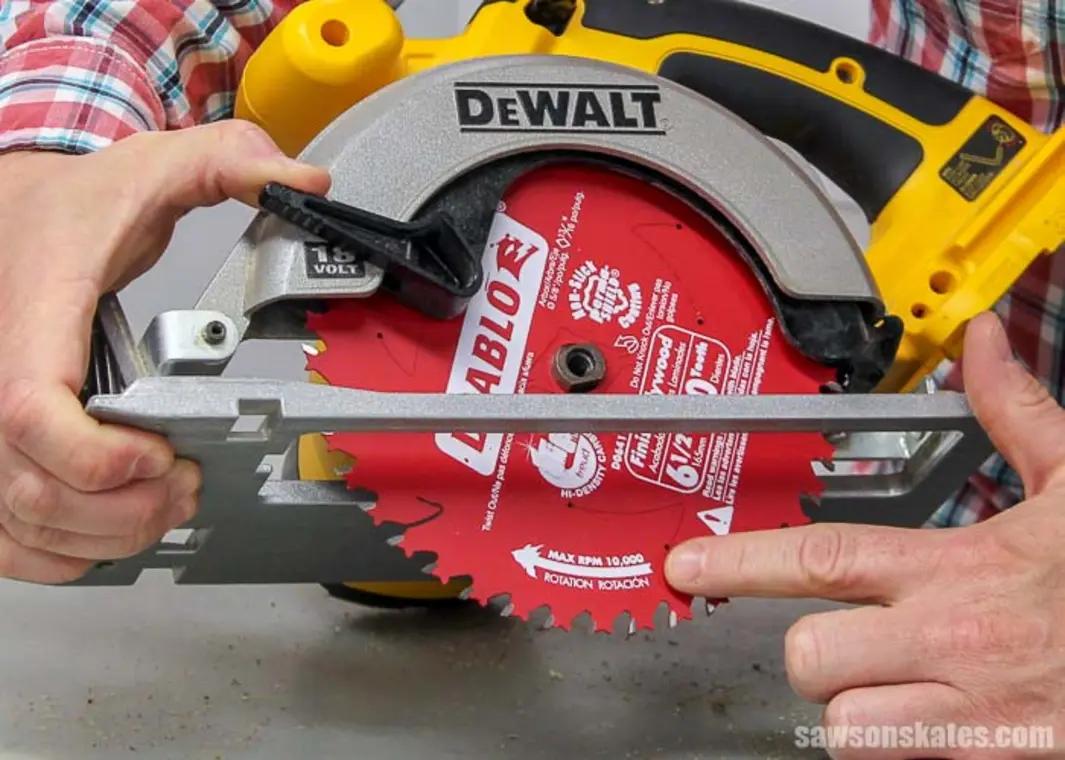 Which Way Does a Circular Saw Blade Go? How to Check Installation Safely