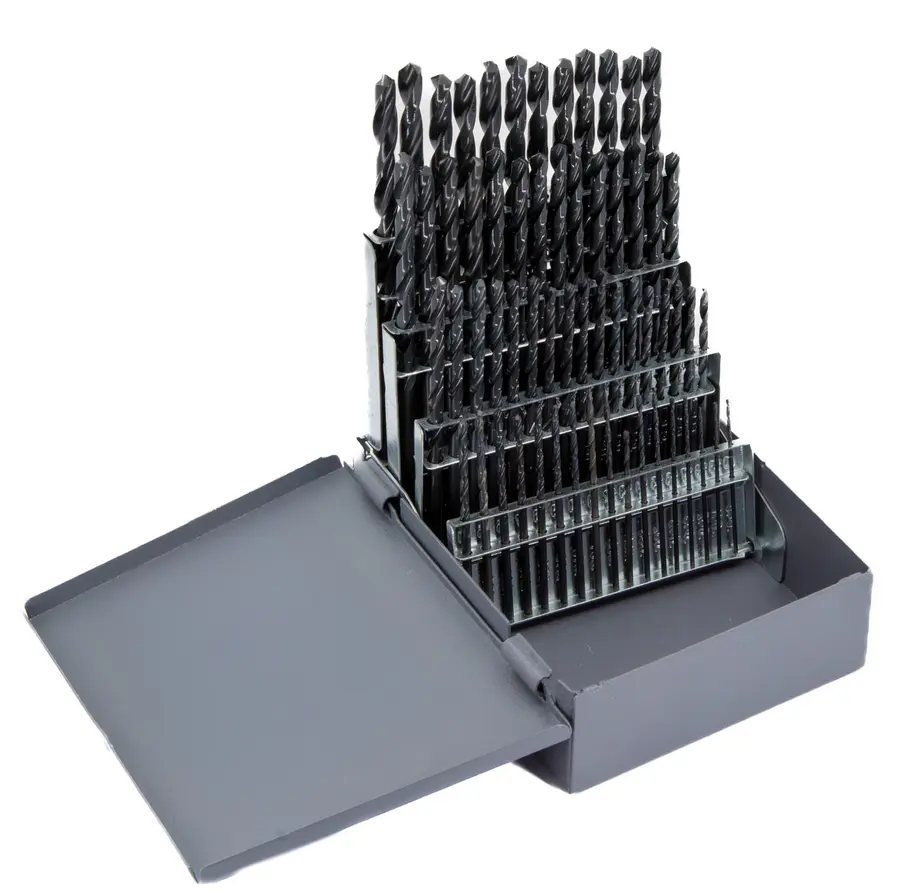
For mixed household, repair, and field work in wood, aluminum, and steel, a fractional-inch twist-drill set is usually the right first purchase. A complete 1/16- to 1/2-inch set in 1/64-inch increments covers the ordinary holes used for screws, bolts, pilot holes, brackets, and general fabrication.
Letter and number drills become useful when the hole has to land between the fractional sizes—especially for tap-drill holes, close-clearance work, small machine screws, and repairs involving an existing part. They are not automatically better drills; they simply offer additional standard diameters. If you do not regularly tap threads or work to specified hole sizes, buying every letter and number drill index is usually unnecessary.
The three common drill bit size systems
Twist drills in the United States are commonly sold in fractional-inch, letter, and numbered series. A drill’s marking identifies its nominal diameter, not its material or intended application. A drill bit can be offered in more than one sizing system and in several lengths. Norseman notes that jobber-length drills are available in number, letter, metric, and fractional sizes.
Fractional drill bit sizes
Fractional bits are marked as inch fractions: 1/16, 3/32, 1/8, 1/4, and so on. They are the easiest sizes to read, measure against hardware, and use for general-purpose work.
Many general-purpose indexes run from 1/16 inch through 1/2 inch in 1/64-inch increments. That means the set includes every fractional size in that range, rather than skipping directly between larger steps. Check the printed contents before buying: not every set that is described as “fractional” includes every 64th. A drill-size reference notes that 1/16 through 1/2 inch by 1/64-inch increments is a common general-purpose range.
Fractional sizes are enough for most of these jobs:
- Pilot holes in wood for common screws.
- Clearance holes where modest fit variation is acceptable.
- Holes for bolts and hardware identified in inch sizes.
- General holes in thin aluminum, steel, plastic, and wood.
- Enlarging an existing hole when an exact intermediate diameter is not required.
Letter drill bit sizes
Letter drills run from A through Z, with diameters increasing from A to Z. They fill many of the spaces between common fractional sizes and are widely encountered in machining and fabrication work. A drill-size chart lists letter designations A–Z alongside their decimal and metric equivalents.
A letter drill is useful when a drawing, repair manual, tap chart, or parts specification calls for a letter designation. It can also be a practical way to get a needed intermediate size without buying a very large assortment of duplicate fractional drills.
For a home user, a full A–Z index makes sense when you routinely:
- Tap threads in steel or aluminum.
- Repair machinery, vehicles, fixtures, or brackets with specified hole sizes.
- Need close-fitting clearance holes for pins, shafts, or hardware.
- Follow shop drawings that call out letter drills.
Do not choose a letter drill simply because it looks close to a fractional size. Compare its decimal diameter with the required hole size and the tolerance of the job.
Number drill bit sizes
Number drills are marked with a number sign, such as #60 or #7. The usual series runs from #80 through #1, and the numbering works backward: #80 is very small, while #1 is larger. The conventional number-drill series and its reverse size progression are described here.
Number drills provide closely spaced small diameters that a normal fractional set does not cover. They are particularly useful for small fasteners, fine pilot holes, tapped holes, and small fabricated parts. They are less essential for ordinary deck, furniture, shelving, and household repair work.
Number designations are easy to misread because a higher number means a smaller drill. When ordering, identifying, or substituting one, record both the drill number and its decimal diameter. That reduces confusion with other wire-gauge systems and makes it easier to compare the drill with a specified metric or fractional size.
When intermediate sizes actually matter
Intermediate drills matter when the final hole size affects fit or a later operation. The most common example is tapping: a hole that is too small can make tapping difficult, while one that is too large can leave insufficient thread engagement. Use the current tap maker’s drill-size chart for the exact thread form, diameter, and pitch rather than choosing the nearest-looking fractional bit.
They also matter for close-clearance holes. A bolt may pass through a slightly oversize general-purpose hole without issue, but a locating pin, press fit, or accurately positioned fastener may require a specified drill size and sometimes a finishing operation beyond drilling.
For ordinary screw pilot holes in wood, exact drill series matters much less than matching the bit to the screw’s core diameter and the wood species. Start with the fastener maker’s recommendation when available, and test on offcuts for visible work.
What “jobber drill bit set” means
“Jobber” describes a common general-purpose twist-drill length pattern, not a size system. A jobber-length drill may be fractional, lettered, numbered, or metric. It is the familiar style found in many portable-drill and drill-press indexes.
For a mixed-use set, jobber length is generally practical because it balances reach, rigidity, and chip clearance for ordinary holes. It is not the answer for every situation:
- A short drill may be preferable where rigidity and accurate starting matter most.
- A longer drill may be needed to reach through a deep part or obstruction.
- A different bit style may be better for a material or hole type than a standard twist drill.
Buy the size system and length needed for the work; do not assume “jobber” means a set includes more sizes.
Choosing a practical set for wood, aluminum, and steel
A durable, usable starting set does not need to be the largest index on the shelf. For most buyers with mixed materials, prioritize complete fractional coverage and replaceable individual bits over a huge assortment that includes sizes you may never use.
Best starting point for most users
Choose a fractional jobber-length set with these characteristics:
- Coverage from 1/16 to 1/2 inch.
- Every 1/64-inch increment in that range, if you want the most flexible general-purpose set.
- Clearly marked sizes on both the case and the bits where possible.
- Individual replacement availability, especially for commonly used small sizes.
- A stated material and use designation suitable for the materials you expect to drill.
This type of set handles the majority of wood, aluminum, and routine steel work. Larger holes can be handled later with dedicated larger-diameter, reduced-shank, step, hole saw, or other purpose-specific accessories as needed.
Add letter drills if you tap or repair equipment
Add a letter set when tap charts, service literature, or parts drawings regularly specify letter sizes. A letter index is a useful second set for someone who repairs equipment, makes metal brackets, or needs intentional clearance fits.
If tapping is occasional, identify the few drill sizes required by the taps you own and buy those individual bits first. This avoids paying for a full index before you know which sizes your work actually uses.
Add number drills for small, precise work
Add number drills when you work with small screws, fine threads, thin sheet parts, instruments, models, or other small features. A broad #1–#80 index provides extensive coverage, but it is more than many home shops need.
For occasional use, buy the individual numbered sizes specified by your tap chart or hardware documentation. Small drills are easy to break, so keeping common replacements can be more useful than owning many rarely used sizes.
How to read set descriptions without getting misled
A drill set description should answer four separate questions:
- What diameters are included? Look for the beginning size, ending size, and increment.
- What sizing system is used? Fractional, letter, number, metric, or a combination.
- What length pattern is used? Jobber is common, but not universal.
- What material and point geometry does the maker specify? Those details affect suitability for the work more than the size markings do.
A large piece count does not necessarily mean better coverage. It may include several separate sizing systems, duplicate sizes, or accessory bits. Compare the actual size list with the holes you make most often.
A simple buying decision
Use this shortcut when choosing a set:
- Mostly home repairs, woodworking, and occasional metal brackets: Buy a complete fractional set first.
- Regular steel or aluminum fabrication with taps: Buy a complete fractional set, then add the letter sizes your tap chart calls for or a full letter set if they recur often.
- Small screws, fine-thread work, electronics-scale projects, or miniature hardware: Add selected number drills or a number-drill index.
- Work from metric plans or metric hardware: Consider a metric set rather than constantly converting and substituting.
A fractional set is not incomplete just because it lacks letter and number drills. It is the most useful baseline for general work. Letter and number drills are the targeted additions that solve size gaps when fit, thread preparation, or a written specification makes those gaps important.
Keep the set usable over time
Return bits to labeled positions after use. The small sizes are easiest to mix up, and number drills are particularly difficult to identify by eye. A drill gauge can help confirm an unmarked bit, but use a reliable size chart when a close tolerance matters.
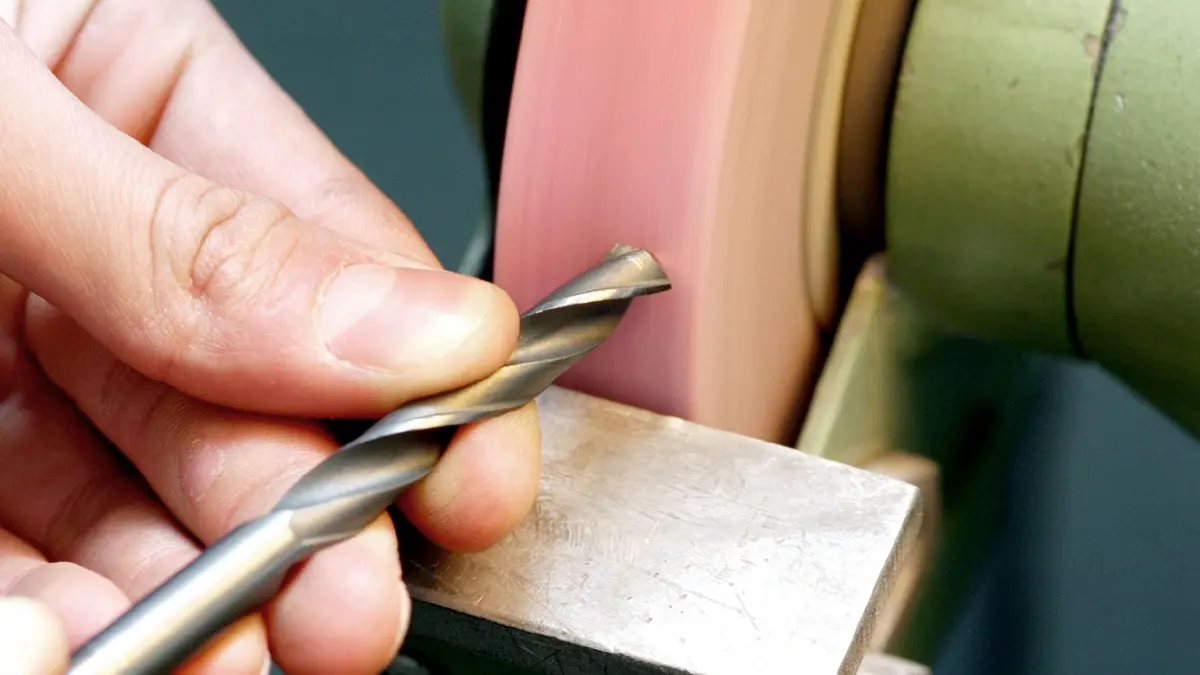
Replace damaged or dull frequently used bits individually when possible. A good index with a few fresh common sizes is more useful than a large assortment with worn cutting edges. For maintenance guidance, see how to sharpen twist drill bits.
Before drilling metal or using an unfamiliar bit style, verify the bit maker’s current instructions for the material, setup, cutting fluid recommendations, and drill operation. For thread work, always use the tap manufacturer’s current drill chart rather than relying on a general conversion table.
References
- Drill bit sizes — Grokipedia. (n.d.). https://grokipedia.com/page/Drill_bit_sizes
- Drill Bit Size Chart: Fractional, Number, Letter & Metric. (n.d.). https://www.6gtools.com/technical-info/drill-bits/drill-size-chart.html
- Drill bit sets: recommendations please. (n.d.). https://www.woodworkingtalk.com/threads/drill-bit-sets-recommendations-please.112610
- Guide to Drill Bit Sizes: Drill Bit Size Chart + Tips for DIYers – Excel Blades. (n.d.). https://excelblades.com/blogs/tool-corner-1/drill-bit-sizes-guide-for-diyers-and-woodworkers
- Drill Size Chart - Machining Reference | CustomPartNet Library. (n.d.). https://www.custompartnet.com/library/drill-size-chart
- EFFECTIVE: 01/01/2021 - Norseman™ Drill. (n.d.). http://www.norsemandrill.com/pdf/cat/Norseman%20Pricelist.pdf
- 07720 Norseman Drill & Tool Type 240-F Inch | Rettigs.com. (n.d.). https://www.rettigs.com/cutting-tools/norseman/drill/jobber/240-f/letter/nor-07720
- Norseman Drill Bits Jobber Length Magnum Super Premium Fractional. (n.d.). https://www.coremarkmetals.com/norseman-drill-bits-jobber-length-magnum-super-premium-fractional
- HSS Jobber Length Drill Bits | Norseman™ Drill & Tool. (n.d.). http://www.norsemandrill.com/Jobber-Length-Drills.php
- drill sets - 32nds or 64ths. (n.d.). https://www.garagejournal.com/forum/threads/drill-sets-32nds-or-64ths.462201
 Screw-Machine-Length vs. Jobber Drill Bits: When a Shorter Bit Is Better
 HSS vs. Cobalt vs. Carbide Drill Bits for Metal
 How to Sharpen Twist Drill Bits: When to Resharpen, Replace, or Recycle