You do not need a router to start DIY woodworking. You can build shelves, simple boxes, planters, benches, basic tables, and many repair projects with saws, a drill, measuring tools, clamps, and a few hand tools. Buy a router when a project calls for work that is difficult to do neatly or repeatedly with those tools.
A router is most valuable for four jobs: shaping edges, cutting consistent grooves and rabbets, making certain joinery cuts, and copying shapes from a template. If those jobs are not on your upcoming project list, it can wait. If they are becoming routine, a router can save time and improve consistency.
Use the project-first test
Before buying a router, look at the next few projects you actually expect to make. A router is a sensible addition when two or more of these needs come up repeatedly:
- You want rounded, chamfered, decorative, or eased edges on visible parts.
- You need grooves or dadoes to hold shelves, dividers, drawer bottoms, panels, or back panels.
- You need rabbets for cabinet backs, picture-frame parts, boxes, or inset panels.
- You want identical curved parts, repeated cutouts, or matching pieces made from a template.
- You need to trim one material flush to another, such as laminate or an oversized panel edge.
- You are making joinery methods that depend on accurately cut slots, mortises, or other routed recesses.
If you only need one of these operations once, consider whether a simpler method, a hand tool, or a local shop service makes more sense than buying a tool and bits for a single task.
Woodworking projects that benefit from a router
Cabinets, bookcases, and built-ins
A router is especially useful when shelves or panels fit into grooves. Dados can locate a shelf during assembly and provide more glue surface than a simple butt joint. Rabbets are also handy for recessed cabinet backs and panel edges.
You can build a basic bookcase without a router by using butt joints, screws, cleats, or brackets. But if you want housed shelves, flush back panels, or repeated joinery across several units, routing becomes more attractive.
Boxes, drawers, and small furniture
Small boxes often use grooves for bottoms and rabbets at corners. Drawer construction may call for grooves, dados, or more elaborate joinery. A router can make these cuts repeatable once you have a dependable setup.
That does not mean every box needs routed joinery. A simple nailed, screwed, or glued box can be entirely appropriate for utility storage, shop organizers, and beginner practice.
Cutting boards, trays, and display pieces
A roundover, chamfer, cove, or decorative profile can make an otherwise plain project feel finished. Routers are useful for finger holds, tray recesses, and edge treatments when the design calls for them.
For many beginner projects, sanding a small eased edge or cutting a basic bevel with a hand plane can produce a comfortable result without a router. The router earns its place when you want the same profile on many edges or on multiple projects.
Curved and matching parts
Template-guided routing is one of the router’s distinctive strengths. Once you make an accurate template, you can reproduce curves for handles, brackets, decorative panels, signs, or matching furniture parts.
A jigsaw can cut a curve, but it may leave an edge that needs further refinement. A router used with a suitable template setup can bring multiple parts to a matching final shape. This is a reason to buy a router only after you have a genuine need for duplicated work.
What you can do without a router
A router is versatile, but it is not the only way to solve most woodworking problems.
Basic straight cuts
Use a circular saw, miter saw, handsaw, or table saw where appropriate for crosscuts, rip cuts, and breaking down sheet goods. A straightedge-guided circular saw can handle many panel cuts. See how to cut plywood straight with a circular saw for a practical alternative when accurate straight cuts are the main requirement.
Simple edge softening
Sandpaper, a sanding block, a block plane, spokeshave, or hand plane can remove sharp corners and create a modest bevel. These methods are slower, but they offer control and are often enough for one-off work.
Grooves and joinery
Depending on the cut and the tools you own, grooves and dados may be made with a table saw, circular saw and guide, chisel, hand plane, or drill-and-chisel method. These alternatives can be effective, although setup time and cleanup may be greater.
For simple construction, change the joint instead. Cleats, pocket-hole screws, corner blocks, dowels, screws, bolts, and butt joints can all suit particular projects. Choose the joint based on the load, material, appearance, and your ability to make it accurately.
Decorative detail
You can get visual interest from wood selection, clean proportions, paint, finish, hardware, contrasting parts, and careful sanding. Decorative routed edges are optional, not a requirement for well-made DIY furniture.
Router alternatives for beginners
If your main need is light edge work and narrow grooves, a compact router may be enough. It is often easier to manage than a larger router, but it is not automatically suitable for every bit, cut depth, or task. Check the current manufacturer manual for the tool’s intended uses, approved accessories, and setup limits.
If you need occasional shaping but do not want a power router yet, consider these alternatives:
- A block plane for chamfers and small edge adjustments.
- A sanding block for softening corners and refining curves.
- A chisel for localized recesses and cleanup.
- A jigsaw followed by sanding for one-off curves.
- A circular saw with a guide for straight panel cuts.
- A drill and chisel for simple mortises or waste removal where suitable.
These alternatives are not always faster, but they can let you complete early projects while learning which operations you truly repeat.
When to buy a woodworking router
Buy a router when it solves a recurring problem rather than when it merely seems like a standard shop tool. Good signs include:
- You have postponed projects because you cannot make a needed groove, rabbet, or profile cleanly.
- You are building cabinets, shelving, drawers, boxes, or furniture with repeated joinery.
- You regularly spend significant time sanding or hand-shaping edges that need to match.
- You are ready to make templates and duplicate parts accurately.
- You have a workholding plan and enough scrap material to practice before cutting project parts.
Wait if you are still learning basic measuring, cutting, drilling, assembly, and sanding; if your projects are mainly rough utility builds; or if you cannot identify a specific upcoming router task. A router purchased without bits, guides, workholding, and practice material often stays unused.
Plan for more than the router itself
The tool is only part of the system. Most router tasks also need an appropriate bit, a way to guide the tool or workpiece, and secure workholding. A straightedge, guide, template, fence, or table may be necessary depending on the operation.
Start with the operations you need rather than collecting many profiles. For many beginners, a basic straight-cutting option and a simple edge-shaping option cover more real projects than a large assortment of decorative bits. Confirm that any bit is approved for your router’s collet and intended operation by consulting the current router and bit manufacturer instructions.
Safety before your first routed cut
A router removes material quickly, and a poor setup can damage the workpiece or cause loss of control. Read the current manual for your specific router and bit before use. It should be the source for approved bit types, installation, adjustment, operating direction, guarding or accessory use, and maintenance.
Secure the workpiece before routing. Do not rely on a hand to hold a small, narrow, or unstable piece near a spinning cutter. Plan the cut so the router has stable support throughout, and practice the full movement with the tool unplugged or otherwise made inoperative according to the manufacturer instructions.
Use sharp, undamaged bits and inspect them before use. Follow the manual and applicable official workplace or local safety guidance for eye, hearing, respiratory, clothing, dust-control, and electrical-safety precautions. If you are uncertain about a cut, make a test cut in scrap, simplify the operation, or seek hands-on instruction.
Bottom line
You can absolutely do woodworking without a router. It is not a first-purchase requirement for DIY shelves, boxes, repairs, and straightforward furniture.
A router becomes worth buying when your projects repeatedly need finished edge profiles, accurate grooves and rabbets, certain joinery cuts, or template-based duplicates. Let those project needs—not the idea of a complete workshop—decide when it belongs in your tool collection.
References
- Is router necessary for DIY woodworking for the home?. (n.d.). https://www.reddit.com/r/BeginnerWoodWorking/comments/1vw5r3j/is_router_necessary_for_diy_woodworking_for_the
- Is a router necessary for DIY projects?. (n.d.). https://www.facebook.com/groups/woodworkingforbeginner/posts/3109780539176550
- Router Guide for Beginner Woodworking–Everything You Need to Know!. (n.d.). https://www.woodshopdiaries.com/basic-woodworking-router-guide
- You Don’t Need a Full-Sized Router! (Try This Instead…). (n.d.). https://www.youtube.com/watch?v=nWnMyfm2cDM
- Best Wood Router Tools for Projects. (n.d.). https://www.homedepot.com/c/ab/best-wood-router-tools-for-projects/9ba683603be9fa5395fab904bee69f4
- Do I need a router?. (n.d.). https://sawmillcreek.org/threads/do-i-need-a-router.235930
- Router Basics - All You Need to Get Started. (n.d.). https://www.bentswoodworking.com/blog/router-setup-for-beginners
- Guide for Protecting Workers from Woodworking Hazards. (n.d.). https://www.osha.gov/sites/default/files/publications/OSHA3157.pdf
- Routers 101 - Woodworking | Blog | Videos | Plans | How To. (n.d.). https://www.woodworkersjournal.com/routers-101
- 12 Essential Router Bit Profiles Every Woodworker Should …. (n.d.). https://www.findbuytool.com/blogs/university/12-essential-router-bit-profiles-every-woodworker-should-know
 Why a Flush-Trim Router Bit Kicks Back and How to Prevent It
 Why Router Bits Break: Feed Rate, Cut Depth, and Safer Pass Planning
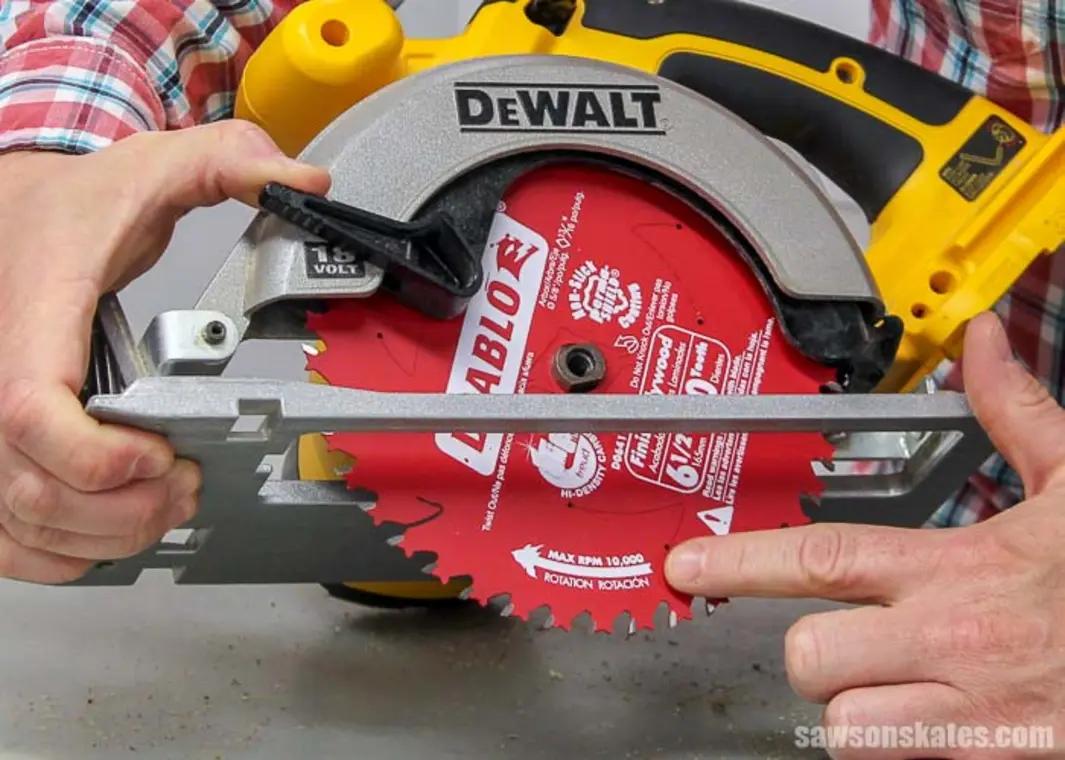 Which Way Does a Circular Saw Blade Go? How to Check Installation Safely