Yes. Roofing shingles can ruin, or at least rapidly dull, a conventional toothed hole saw. Asphalt shingles commonly contain hard mineral granules, and the combination of abrasive material, sticky asphalt, heat, and a demanding cut can wear the teeth far faster than ordinary wood drilling.
A hole saw that struggles after one roof penetration is often the damaged component—not automatically the drill or battery. Inspect the saw first, then test the drill with a known-good accessory in an appropriate material. If the drill runs and holds its accessory normally afterward, the hole saw is the more likely problem.
Why shingles are hard on a hole saw
A standard hole saw is intended to cut by its teeth. Roofing shingles are not simply soft asphalt. Their granulated surface can abrade the cutting edges, while heated asphalt can coat the teeth and trap debris in the gullets. Once the teeth lose their sharp edges or become packed with residue, the saw creates more friction instead of cutting cleanly.
The roof deck below adds another variable. A saw may have to pass through several shingle layers, underlayment, nails, and wood sheathing. Encountering metal fasteners can damage teeth or stall the cut, depending on the hole saw and the fastener.
Source: Unsplash
How to tell whether the hole saw is worn out
Remove the hole saw from the arbor and inspect it in good light. Do not handle the teeth carelessly, even if they appear dull.
Signs the hole saw is likely damaged
Look for:
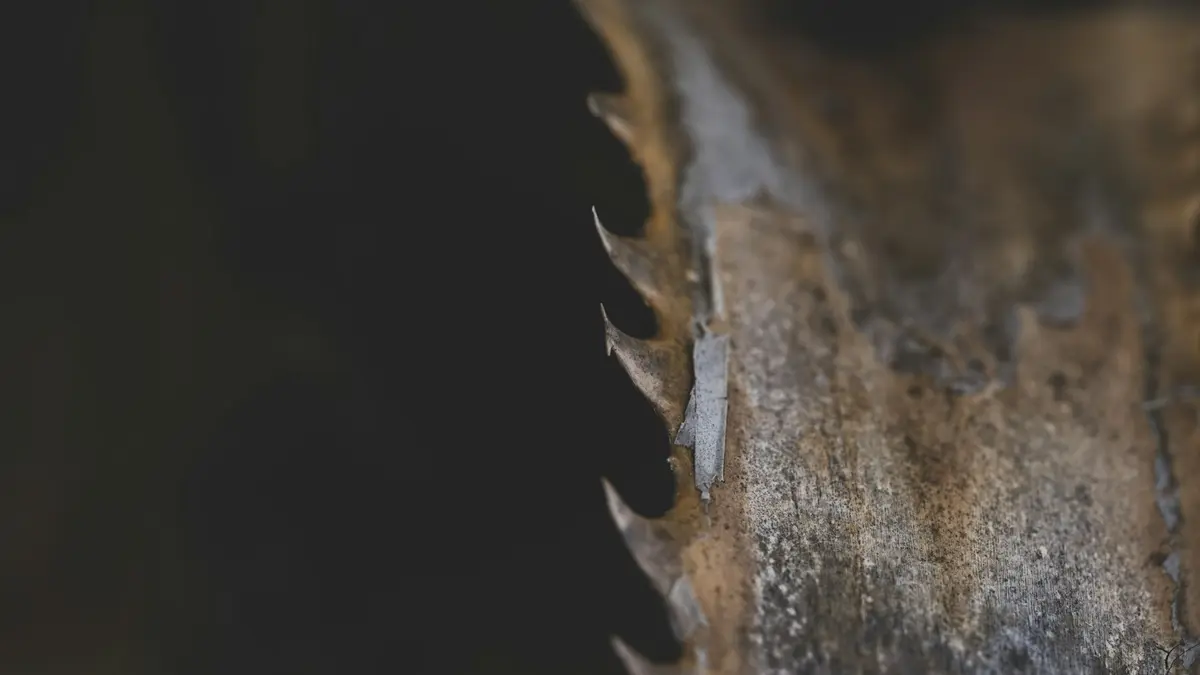
- Teeth that look rounded, flattened, chipped, bent, or uneven
- Tooth spaces packed with black asphalt, granules, wood fibers, or metal debris
- Blue, straw-colored, or heavily darkened metal that suggests substantial heat exposure
- Cracks in the cup, missing teeth, or a distorted rim
- A saw that skates, smokes, stalls, or makes very slow progress in clean scrap wood after it has been cleaned
Residue alone does not always mean the saw is finished. If the cup and teeth are intact, carefully cleaning away built-up material may reveal whether the teeth still have usable edges. Replace a hole saw with cracked, distorted, or missing teeth rather than trying to use it for another demanding cut.
A simple comparison test
After cleaning the saw, compare it with a new or known-good hole saw of the same type if one is available. The useful saw should engage the material with noticeably less pressure and produce a more consistent cut. Do this only in a stable workpiece, not while standing on a roof.
If the old saw still overheats or barely cuts ordinary wood while the comparison saw works normally, the old hole saw is worn out or unsuitable for the material it encountered.
Was the drill harmed?
A difficult hole-saw cut can make a drill hot, trigger an overload protection system, loosen an accessory in the chuck, or reveal a pre-existing weakness. It does not necessarily mean permanent drill damage.
With the battery removed or the tool otherwise made safe according to its manual, inspect the drill and hole-saw setup for obvious problems:
- A chuck that no longer grips accessories securely
- A bent arbor, loose pilot bit, damaged threads, or a hole saw that runs out of true
- Unusual grinding, rubbing, burning smell, or visible damage around the chuck or vents
- A trigger, direction selector, or clutch setting that no longer operates normally
Then fit a straight, undamaged bit or accessory appropriate for a simple test in scrap material. If the drill runs normally, the chuck grips properly, and there is no unusual noise or heat during that light test, the roofing cut likely harmed the hole saw rather than the drill.
Stop using the drill and arrange service if it has persistent unusual noise, smoke, odor, sparking beyond what its manufacturer describes as normal, a damaged cord or housing, or a chuck that will not retain an accessory. Follow the current manufacturer manual for inspection, maintenance, and service instructions.
Could the battery be damaged?
A battery that becomes hot or stops during a demanding cut may have reached its protection limits or may simply be discharged. That alone does not establish battery damage.
Let a hot battery cool in a suitable location and follow the battery and charger instructions in the current manufacturer documentation. Do not keep forcing a stalled drill or repeatedly restart a tool that has shut down under load.
Do not use or charge a battery that is cracked, leaking, swollen, severely overheated, smells abnormal, or otherwise visibly damaged. Use the manufacturer’s instructions for safe handling and disposal or recycling. If a second approved battery performs normally with the drill and a good accessory, the first battery may need further evaluation.
Better ways to approach a roof penetration
The right method depends on the roof system, the opening size, the item being installed, and the manufacturer instructions for the roofing material and penetration flashing. A hole through a roof is not only a cutting task; it is also a waterproofing detail.
Before cutting, verify the planned location from inside and outside the building. Check for wiring, plumbing, framing, and other concealed hazards. If the opening is for a vent, pipe, cable, or similar installation, follow the installation instructions for that component and its flashing system.
Where practical, separate the shingle-cutting work from the wood-cutting work rather than driving one toothed hole saw through every layer at once. This can reduce the abrasive load on the saw and give you more control over the roof surface. The exact approach should preserve the roof assembly and match the applicable installation guidance.
Avoid pressing hard to force a dull or clogged hole saw through the roof. Excess pressure raises heat and can make the drill harder to control. Pause if cutting slows sharply, clear debris only after the tool has stopped and been made safe, and inspect the accessory before continuing.
Safety points to verify before cutting
Roof work adds fall hazards, unstable footing, and the possibility of concealed building services. A hole saw can also catch suddenly if it binds or contacts an unexpected fastener.
Use the drill, arbor, pilot bit, hole saw, battery, and charger only as permitted by their current manufacturer documentation. Verify the accessory’s intended materials, the drill’s operating instructions, required protective equipment, and any roof-access or fall-protection requirements that apply to the job. If you cannot confirm the penetration detail will be properly flashed and sealed, consult a qualified roofing or trade professional before cutting.
When replacement is the sensible answer
Replace the hole saw when its teeth are visibly damaged, its cup is distorted or cracked, or it remains slow and heat-prone after cleaning. A worn hole saw is usually not worth forcing through another shingle-and-sheathing cut.
If the drill works normally with another appropriate accessory and the battery charges and operates normally under ordinary use, a sacrificed hole saw is often the full extent of the damage. If the drill, chuck, arbor, or battery shows continuing symptoms after the event, stop troubleshooting under load and follow the manufacturer’s service guidance.
References
- Did I ruin my bit/battery/drill? Please help! : r/DIY. (n.d.). https://www.reddit.com/r/DIY/comments/mzcflu/did_i_ruin_my_bitbatterydrill_please_help
- Need the right tool | Mike Holt’s Forum. (n.d.). https://forums.mikeholt.com/threads/need-the-right-tool.35433
- How To Cut Thru Shingled Roof. (n.d.). https://www.finehomebuilding.com/forum/how-to-cut-thru-shingled-roof
- Can a contractor replace just the damaged roof shingles?. (n.d.). https://www.facebook.com/groups/NEOakPark/posts/7858969660844337
- Mastering Roof Inspections: Asphalt Composition Shingles, …. (n.d.). https://www.nachi.org/asphalt-comp-shingles-part55-109.htm
- Diamond Hole Saws: The Ultimate 2026 Guide. (n.d.). https://www.diamondtoolstore.com/blogs/default-blog/diamond-hole-saws-guide
- 2 Ways to Cut Shingles. (n.d.). https://www.youtube.com/watch?v=AlusAYmiM2Q
- Common Issues When Using Drill Bits and Their Solutions - Danyang Coinch Tools Co., Ltd.. (n.d.). https://www.coinchtools.com/news/common-drill-bit-issues-and-solutions
- ### Risk Analysis for the Hole Saw in Compliance with the …. (n.d.). https://pdf.ampire.de/Risiko/LS_en.pdf
- Drilling Machine Troubleshooting: Common Problems and Solutions - GZ Industrial Supplies. (n.d.). https://www.gz-supplies.com/news/drilling-machine-troubleshooting-common-problems-and-solutions
 How to Drill Porcelain Tile Without Cracking or Chipping It
 Drill-Powered Circular Saw Attachments: What They Are and Why They Need Extra Caution
 Circular Saw Blade Maintenance: Clean, Sharpen, or Replace?