Bench grinder dust control starts with limiting what escapes during grinding, then cleaning up what settles afterward. For ordinary occasional steel-tool sharpening, a tidy grinder station, sensible positioning, and prompt cleanup can greatly reduce nuisance dust. But do not treat every dust problem as a reason to put a household shop vacuum next to the wheel: sparks, hot particles, and certain metal dusts can make that arrangement unsafe.
The material matters. Grinding masonry, concrete, stone, coatings, aluminum, magnesium, or unknown alloys calls for a different level of planning than touching up a carbon-steel edge. If you cannot identify what you are grinding or whether it may produce hazardous or combustible dust, stop and verify the material and the appropriate controls before continuing.
Control dust at the grinder first
The most effective approach is source control: capture or contain dust where it is made, rather than trying to clean an entire shop later. On a bench grinder, that usually means keeping the work area organized, directing sparks and debris toward a noncombustible clear area, and avoiding grinding that sends material across the room.
Do not improvise a close-fitting hood, enclosure, or pickup nozzle that can interfere with wheel guards, tool rests, eye shields, work handling, or normal access to the grinder. Keep the grinder configured as its manufacturer specifies. Verify the current manual for permitted attachments, guard arrangement, wheel selection, clearances, maintenance, and operating limits.
A fixed capture system may be useful for repeated work, but it needs enough airflow, a suitable pickup location, and filtration designed for the dust. Guidance for handheld grinding of silica-containing materials illustrates the basic principle: a shroud and vacuum system must be matched to the tool and maintained so airflow and capture are not lost. It is not a specification for converting a bench grinder into a vacuum-equipped machine. OSHA’s handheld grinder guidance specifies tool-appropriate dust collection and emphasizes maintenance of the collection system.

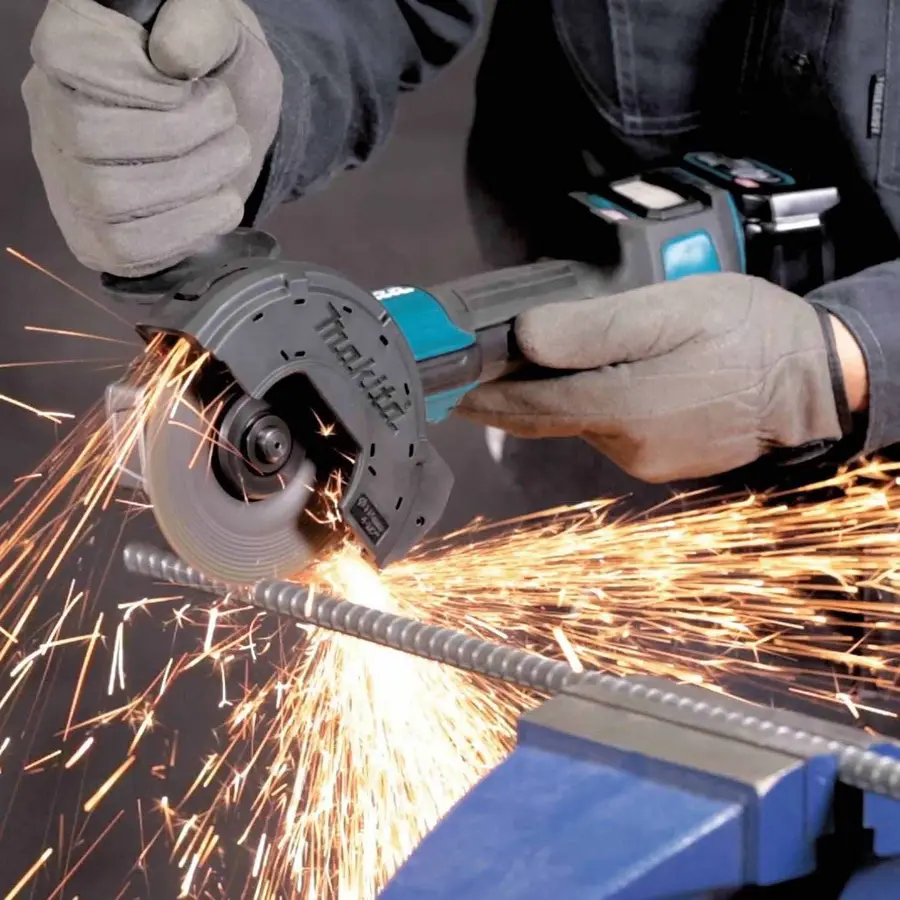
Source: Unsplash
Keep sparks and dust collection separate unless the system is designed for both
Grinding produces sparks and potentially hot particles. A vacuum hose placed where it can ingest sparks, glowing particles, or metal fragments can create a fire hazard, damage filters, or introduce ignition sources into collected dust. Never assume an ordinary wet/dry vacuum is suitable for hot debris or metal-grinding dust.
This is especially important for combustible-metal dust. OSHA notes that industry standards recognize combustible-dust hazards in metal-dust collection systems and specifically discusses restrictions on certain indoor dry collectors and self-contained dry downdraft benches for aluminum dust. OSHA’s interpretation on metal-dust collection is workplace-focused, but its core lesson applies in a home shop: do not collect potentially combustible metal dust in a casual indoor dry system.
Do not use a common dust collector, household vacuum, or shop vacuum as a default collector for aluminum, magnesium, titanium, or unknown metal dust. Do not mix these dusts with wood dust, finishing residue, or other combustible shop waste. Seek equipment guidance from the tool, vacuum, and dust-collection manufacturers, and consult qualified fire-safety or industrial-hygiene help when the work is recurring or substantial.
Match the plan to the material
Ordinary ferrous-metal sharpening and deburring
For occasional grinding of known steel tools, the practical priorities are limiting unnecessary grinding, keeping nearby surfaces clear, and removing settled debris before it spreads. Position flammable materials, solvent containers, rags, sawdust, paper, and aerosol products well away from the spark path.
Use the grinder’s installed guards and eye protection provisions as directed in its manual. Official bench-grinder safety material also warns against loose clothing, jewelry, and unsecured long hair around the rotating wheel. This public safety note gives those basic precautions.
Concrete, stone, mortar, and masonry
Dust from these materials can contain respirable crystalline silica. A bench grinder is not normally the preferred tool for masonry work, but if a grinding operation involves silica-containing material, do not rely on open-shop ventilation or sweeping. OSHA identifies water delivery or a properly matched shroud-and-vacuum system as control methods for handheld grinding of these materials; wet methods in that guidance are specified for outdoor use. See OSHA’s silica-control fact sheet.
For a home shop, the safer decision is often to move the task to an appropriate outdoor setup or use a tool and dust-control method made for masonry. Verify current local requirements and official health guidance for silica work, particularly if the task is frequent.
Coated, plated, painted, or unknown material
Old paint, plating, corrosion protection, and unknown alloys may create hazards that are not obvious from the base metal. Do not grind material that may contain lead-bearing coatings or other hazardous constituents without identifying it and planning appropriate controls. A disposable dust mask is not a universal solution; select respiratory protection only after checking current official guidance for the contaminant and ensuring the equipment is suitable and used correctly.
Clean up settled bench grinder dust safely
Cleanup is not source control, but it prevents dust from being tracked through the shop, becoming airborne again, or accumulating around ignition sources. Let the grinder stop completely, allow hot debris to cool, and make sure there is no smoldering material before cleaning.
Avoid dry sweeping, aggressive brushing, and blowing the bench or floor with compressed air. Those methods redistribute fine dust into the room and onto other surfaces. Instead, use one of these approaches as appropriate for the material:
- Collect coarse steel debris with a dedicated brush, scoop, or magnetic pickup, then place it in a suitable metal container.
- Wipe smooth surfaces with a damp disposable cloth when the dust is known to be non-reactive with moisture and the method will not create another hazard.
- Use a vacuum only when its manufacturer says it is suitable for the material being collected and it will not ingest hot particles or sparks.
- Empty the collector carefully and dispose of contents according to the material involved and local waste rules.
Vacuum performance falls as filters load. NIOSH guidance on grinding-dust collection notes that filter buildup reduces airflow and dust capture, and that filters and bags should be cleaned or changed according to the manufacturer’s instructions. NIOSH guidance on controlling grinding dust also advises proper disposal practices when changing collected dust.
A practical home-shop routine
For light, known steel grinding, use a simple routine:
- Before grinding, clear combustibles and loose clutter from the spark path and floor around the grinder.
- Grind only what is necessary, using the grinder and wheel as the manufacturer directs.
- Let the wheel stop, inspect the surrounding area for hot particles, and wait until debris has cooled.
- Collect visible debris from the bench, grinder base, and floor using a method suitable for the material.
- Check that dust has not accumulated behind the grinder, under the bench, or near electrical equipment.
- Empty cleanup containers before they become a mixed pile of metal debris, wood dust, rags, and other shop waste.
Frequent small cleanups are safer and easier than allowing layers of dust and swarf to build up. OSHA similarly identifies frequent cleaning to keep combustible-metal dust accumulation low as one possible part of hazard control in industrial settings. OSHA’s metal-dust collection interpretation explains why accumulated metal dust deserves attention.
Ventilation helps, but it is not a substitute for capture
General ventilation can make a shop more comfortable and may help clear residual airborne dust, but it does not reliably capture particles at the wheel. Do not aim a fan so it blows grinding dust across your face, into the rest of the shop, or toward a heater, pilot light, electrical equipment, or stored combustibles.
If using open doors or an exhaust fan, think about direction: move residual air away from occupied areas and avoid creating a cross-breeze that carries sparks or dust where you do not want them. Ventilation is a secondary measure after reducing the work, controlling it at the source where feasible, and cleaning settled dust safely.
When a basic home-shop setup is not enough
Upgrade the plan or get professional advice when you regularly grind large quantities of metal, generate fine powder, work with aluminum or other potentially combustible metals, grind silica-containing materials, or work on coated or unknown material. The same applies if dust is visibly escaping into the shop despite your efforts, or if nearby living spaces share air with the work area.
For recurring work, use a collection and ventilation approach specifically designed for the process and material. Confirm suitability with current manufacturer documentation and applicable official guidance rather than adapting a general-purpose vacuum or dust collector by assumption.
Bottom line
Keep bench grinder dust under control by separating two jobs: limit dust and debris at the wheel, then remove settled material without stirring it back into the air. For occasional steel grinding, good housekeeping and a clear spark zone are often the foundation. For silica, coatings, unknown materials, or combustible metal dust, a casual vacuum-and-hose setup can create more risk than it solves. Identify the material first, keep sparks away from collection equipment not designed for them, and use purpose-built controls when the task demands them.
References
- Dustless Tools: Dust Control. (n.d.). https://dustlesstools.com
- Control of Hazardous Dust When Grinding Concrete. (n.d.). https://www.silica-safe.org/wp-content/uploads/2025/12/5-Whats-Working-NIOSH-Grinding-Concrete.pdf
- The use of dry down draft tables or benches for collection of metal dust generated during grinding, buffing, and deburring operations | Occupational Safety and Health Administration. (n.d.). http://www.osha.gov/laws-regs/standardinterpretations/2016-05-23
- Handheld Grinders for Tasks Other Than Mortar Removal. (n.d.). https://www.osha.gov/sites/default/files/publications/OSHA_FS-3628.pdf
- Bench grinder — Grokipedia. (n.d.). https://grokipedia.com/page/Bench_grinder
- Grinders - OSHA Safety Manuals. (n.d.). https://www.safetymanualosha.com/grinders
- Controlling Dust When Using a Grinding Wheel on Masonry. (n.d.). https://www.protradecraft.com/construction-phase/safety/video/55181299/controlling-dust-when-using-a-grinding-wheel-on-masonry
- Safety Note. (n.d.). https://plumascounty.us/DocumentCenter/View/4329
- Bench Grinder Dust Safety : r/handtools. (n.d.). https://www.reddit.com/r/handtools/comments/1ffw35s/bench_grinder_dust_safety
- Weekly Safety Meeting – Bench Grinder Safety. (n.d.). https://safetymattersweekly.com/weekly-safety-meeting-bench-grinder-safety
 Can You Put a Circular Saw Blade on an Angle Grinder?
 Can You Clean a Belt Sander Belt? When a Cleaning Stick Helps and When to Replace It
 Can You Rip Cut Wood With a Miter Saw?