A cut-off wheel is for making cuts; a grinding wheel is for removing substantial metal and shaping; a flap disc is for smoothing, blending, and moderate stock removal; and a wire wheel or cup brush is for rust, paint, scale, and contamination removal. Choose the accessory by the job you need done, then confirm that your grinder, guard, flange, arbor, and wheel markings permit that combination.
The most important rule is that an accessory that fits the spindle is not automatically compatible. Before mounting anything, check the grinder’s current operator manual and the accessory label for wheel type, diameter, arbor or mounting system, guard requirements, and maximum safe operating speed. One manufacturer’s 4-1/2-inch grinder manual, for example, permits Type 27 wheels but specifically prohibits Type 1 cut-off wheels on that model; the instructions for your own grinder control. Operator’s manual
Quick task-first selection
| If your job is to… | Start with… | What it does well | Avoid using it for… |
|---|---|---|---|
| Cut bolts, rebar, bar stock, tube, or sheet metal | Cut-off wheel | Narrow, straight-through cuts | Side grinding, blending, or sanding unless the wheel label explicitly allows it |
| Knock down a proud weld or reshape steel | Depressed-center grinding wheel | Fast, aggressive material removal | Fine finish work |
| Blend a weld, deburr an edge, or smooth grinding marks | Flap disc | Grinding and finishing in one step | Deep cuts or severe stock removal |
| Sand or refine a broad surface | Fiber disc or sanding disc with the correct backing pad | Controlled sanding and surface preparation | Cutting or heavy weld removal |
| Remove loose rust, paint, oxidation, or scale | Wire wheel or wire cup brush | Surface cleanup without cutting deeply into sound metal | Precision finishing or heavy grinding |
| Clean a surface with less scratching than a wire brush | Nonwoven surface-conditioning disc | Light rust removal, blending, and coating preparation | Thick welds or major material removal |
| Cut masonry, tile, or concrete | A material-specific diamond accessory | Mineral-based materials when the wheel is rated for them | Metal-only work unless the label allows it |
Cut-off wheels: for cutting, not grinding
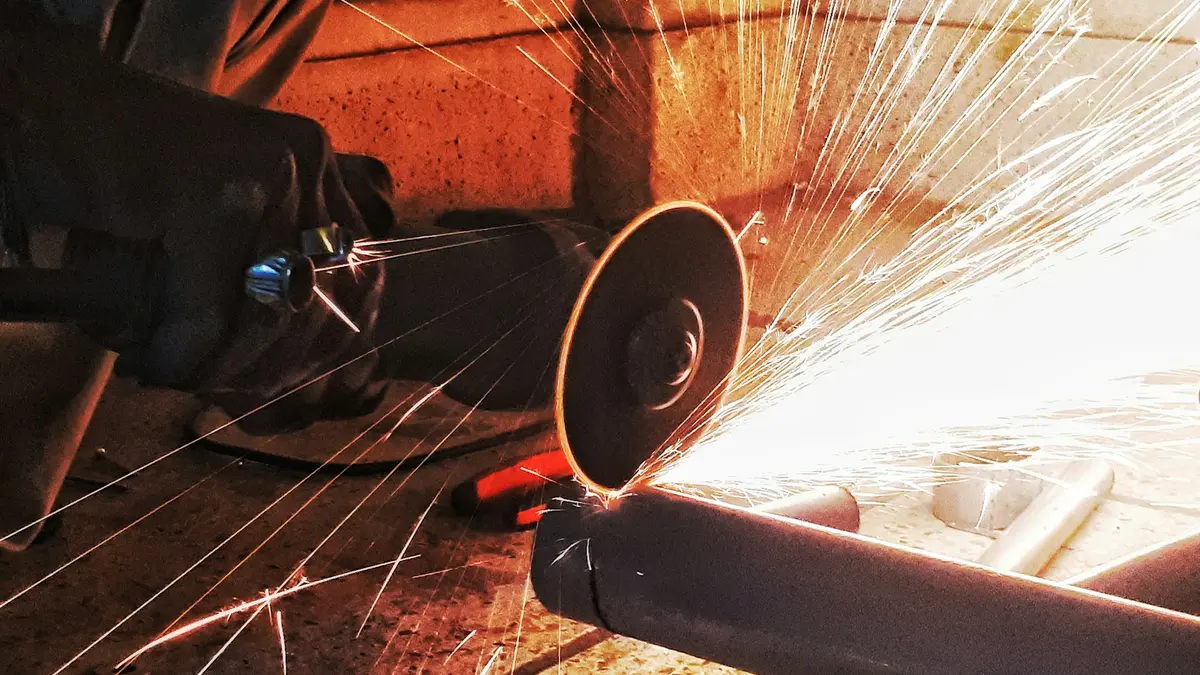
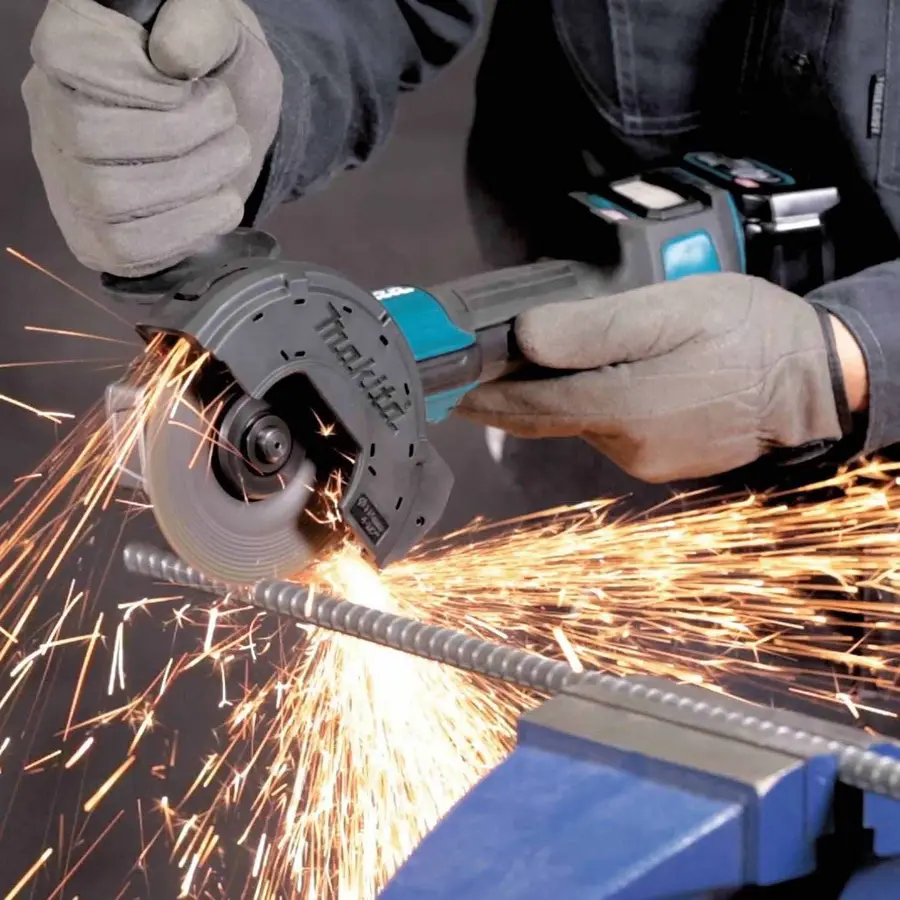
A cut-off wheel, also called a cutting disc, is thin so it can make a narrow kerf with relatively little waste. It is the usual choice for shortening bolts, cutting steel tube, slicing rebar, trimming sheet metal, and separating small metal parts. Cut-off wheels are commonly used on metal bars, tubes, sheet metal, and plates. Acme Tools
When to use one
Use a cut-off wheel when the goal is separation: cut the part free, shorten it, or make a slot. Support the work so the cut cannot close and pinch the wheel. Let the wheel cut straight through the material without twisting it.
What not to assume
Do not treat a thin cutting wheel as a general-purpose grinding disc. Whether side pressure, side grinding, or a particular guard arrangement is allowed depends on the wheel markings and the grinder manual. A wheel can fracture if it is installed incorrectly, damaged, overloaded, or used outside its intended application. If your grinder documentation does not approve a cut-off wheel and its required guard for that model, do not install one.
Grinding wheels: for fast metal removal
A conventional depressed-center grinding wheel is the heavy-removal option for steelwork. Use it to reduce a weld bead, remove excess material, bevel an edge, shape a part, or prepare structural steel for welding. A manufacturer manual describes a supplied grinding wheel as suitable for grinding welds, surface preparation for welding, structural steel, and stainless steel. Operator’s manual
Cutting disc vs. grinding wheel
The practical distinction is simple:
- Cut-off wheel: thin, intended to cut through material.
- Grinding wheel: thicker, intended to withstand the contact used to remove material from a surface.
A grinding wheel removes metal quickly, but it typically leaves a coarse surface and noticeable scratches. It is often the first stage before a flap disc or surface-conditioning accessory.
Best uses
Choose a grinding wheel when speed matters more than appearance: reducing a high weld, making a bevel before welding, removing a sharp heavy edge, or reshaping steel. Use controlled passes and keep the work securely clamped. Do not attempt to make a delicate finish with an aggressive wheel when a flap disc would give more control.
Flap discs: for grinding and smoothing in one step
A flap disc uses overlapping abrasive flaps that wear away to expose fresh abrasive. It is a useful middle ground between a hard grinding wheel and a sanding disc: capable of meaningful material removal but generally better at leaving a usable finish.
Use a flap disc for weld blending, deburring, edge easing, rust cleanup, mill-scale removal, and preparing metal for primer or paint. They are widely used for minor imperfections, scratches, burrs, rust removal, and polishing or finishing work. Acme Tools
Choose grit by the amount of removal needed
- Coarse grit: For heavier weld blending, edge work, and faster stock removal.
- Medium grit: For general cleanup and moving from grinding toward a smoother finish.
- Fine grit: For refining the surface before coating or for a more finished appearance.
The exact grit should be selected from the disc maker’s application guidance and the finish your project requires. A finer grit does not make an unsuitable disc safe for a task it was not designed to perform.
Type 27 vs. Type 29 flap discs
Flap discs are commonly sold in flat and conical profiles. Type 27, the flatter style, is generally intended for shallow working angles and smooth blending on flat surfaces. Type 29, the conical style, is generally more aggressive and useful for stock removal, edges, contours, and irregular surfaces. Weiler Abrasives
For a broad, flat weld blend, start with the flatter profile. For stronger cutting action on an edge or contoured area, a conical profile may be the better match. Follow the disc maker’s specified working-angle guidance rather than forcing a disc into a position that feels awkward.
Fiber discs and sanding discs: for controlled surface work
Fiber discs are abrasive discs that normally mount on a compatible backing pad. They are useful when you need more sanding control than a grinding wheel provides: flattening light weld marks, removing coatings, refining steel, or preparing a surface for paint.
Compared with a flap disc, a fiber disc is often a more specialized sanding setup. It requires the correct backing pad, and its mounting arrangement must match the grinder and disc system. Do not substitute a random pad, flange, or adapter. Confirm the approved mounting parts in the grinder manual and the abrasive manufacturer’s instructions.
For light surface refinement, a nonwoven surface-conditioning disc can be a better choice than either a fiber disc or a wire brush. These accessories are intended for blending, light rust or paint removal, and surface preparation while producing a less aggressive finish. Empire Abrasives
Wire wheels and wire cup brushes: for rust, paint, and cleanup
A wire wheel angle grinder attachment removes surface contamination rather than grinding metal away like an abrasive wheel. Use one to strip loose rust, paint, oxidation, dirt, and scale from metal before welding, painting, or inspection. Manufacturer documentation describes a wire wheel brush as suitable for removing paint or rust from metal surfaces. Operator’s manual
Wheel brush or cup brush?
- Wire wheel brush: Better for edges, narrow faces, inside corners, and irregular shapes.
- Wire cup brush: Better for broad, open surfaces where the face of the brush can sit more squarely on the work.
Crimped vs. twisted wire
Crimped wire is generally more flexible and less aggressive, making it useful for lighter rust, oxidation, and general cleanup. Twisted-knot wire is more aggressive and better suited to heavier scale and stubborn coatings, but it can mark the base metal more readily. Acme Tools
Wire brushes can throw loose wire fragments. Replace a brush with broken, excessively splayed, bent, or missing wires, and use the protective equipment and guard arrangement specified by the grinder and brush manufacturers.
Diamond and masonry accessories
Diamond accessories are commonly used for mineral materials such as masonry, concrete, brick, stone, and tile. They are not interchangeable with bonded abrasive metal cut-off wheels simply because they share a diameter or arbor opening.
Select a diamond wheel specifically marked for the material and operation, such as cutting or grinding. Check whether the accessory is intended for dry use, wet use, or both, and follow its instructions. Your grinder manual must also permit the wheel type and required guard. If either source is unclear, use a tool and accessory system explicitly approved for the job.
Angle grinder disc compatibility checklist
Before every accessory change, unplug a corded grinder or remove the battery from a cordless model. Then verify all of the following:
- Wheel type: The grinder manual approves that wheel or attachment category.
- Diameter: The accessory is no larger than the grinder’s stated maximum diameter.
- Speed rating: The wheel’s marked maximum safe operating speed is at least the grinder’s rated no-load speed. A manufacturer manual specifically directs users to ensure an accessory’s operating-speed rating is not less than the grinder’s speed. Operator’s manual
- Arbor and mounting: The arbor hole, threaded hub, flange, backing pad, or adapter matches the grinder’s approved mounting system.
- Guard: The correct guard is installed and positioned as directed for that accessory and operation.
- Condition: The wheel is dry, undamaged, and free of cracks, deep chips, missing segments, bent hardware, or badly frayed wire.
- Material rating: The accessory is rated for the workpiece material and task.
Do not modify a guard, enlarge an arbor hole, stack accessories, force a wheel onto the spindle, or use homemade adapters. Also do not overtighten the flange nut; improper installation can damage a wheel. Operator’s manual
Basic operating safety for every disc type
Angle grinders can throw sparks, abrasive fragments, wire pieces, and workpiece debris. The exact protective equipment, guard use, wheel orientation, and operating procedure must come from the current grinder manual and accessory instructions. At a minimum, use the eye and face protection, hearing protection, protective clothing, and respiratory protection appropriate to the dust, coating, and material involved.
Keep bystanders away from the work area, clamp the workpiece, and inspect the wheel before use. Avoid loose clothing, jewelry, and anything that can catch in the rotating accessory. Be especially cautious around painted, galvanized, coated, or unknown materials: grinding or brushing can create hazardous dust or fumes. Check current official guidance for the material before starting.
If a wheel vibrates, wobbles, contacts the guard, has been dropped, or behaves unusually, stop immediately. Disconnect power before inspection. Replace questionable accessories rather than trying to use up a damaged wheel.
A simple buying and setup approach for new owners
For basic steel and household metalwork, the most useful starting set is usually a compatible grinding wheel, several cut-off wheels if your grinder manual approves them, a couple of flap discs in different grits, and a wire brush for cleanup. Add a backing-pad sanding system or nonwoven conditioning disc when surface finish matters.
Buy accessories for the material you actually work with, not a mixed collection based only on disc diameter. A metal cut-off wheel, masonry diamond wheel, wire cup brush, and flap disc may all physically resemble grinder accessories, but they solve different problems and can have different guard and mounting requirements.
When uncertain, stop at the label. Match the task to the accessory, then match the accessory to the grinder. That sequence prevents most beginner mistakes with angle grinder disc types and uses.
References
- Angle Grinder Discs: 7 Types and Their Applications. (n.d.). https://benchmarkabrasives.com/blogs/news/7-types-of-angle-grinder-discs-and-their-uses
- Types of Angle Grinder Wheels and Discs - Tool Crib of the North. (n.d.). https://www.acmetools.com/tool-crib/ac606577/types-of-angle-grinder-wheels-and-discs
- Every Angle Grinder Disc Explained In 11 Minutes. (n.d.). https://www.youtube.com/watch?v=bbsIcbvyVqU
- Flap Disc Variations: The Best Specialty Discs for Grinding, Blending, and Polishing - Empire Abrasives. (n.d.). https://www.empireabrasives.com/blog/best-specialty-flap-disc-variations-grinding-blending-polishing
- Beginner’s Guide to Flap Discs | Everything You Need to Know About Flap Discs and Angle Grinders. (n.d.). https://www.youtube.com/watch?v=uXGrUXEsJYc
- The 7 Types of Angle Grinder Discs and Their Various Uses. (n.d.). https://www.datapowertools.co.uk/blog/types-of-angle-grinder-discs-and-their-uses
- Guide to Flap Discs. (n.d.). https://www.weilerabrasives.com/en/na-articles/flap-disc-guide
- OPERATOR’S MANUAL - 4-1/2 in. ANGLE GRINDER …. (n.d.). https://images.thdstatic.com/catalog/pdfImages/c3/c32056c1-fd49-41dc-af70-bc3c30c58892.pdf
- What Disc to use Angle Grinding | Complete guide to finishing metalwork. (n.d.). https://theweldspace.co.uk/the-weld-space-blog/what-consumables-to-use-angle-grinding
- Angle Grinder Systems & Discs for Metal Fabrication | 3M. (n.d.). https://www.3m.com/3M/en_US/metalworking-us/resources/3M-abrasives-for-right-angle-systems
 How to Use an Angle Grinder With Less Kickback When Cutting Metal
 Can You Put a Circular Saw Blade on an Angle Grinder?
 How to Cut an Electrical Box Opening in Cinder Block